
The overload relay trips, the mill stops, the operator resets it, and twenty minutes later it trips again. By the third reset the conversation has moved to the motor — its age, its windings, whether the supplier sent a bad one.
That is usually the wrong place to look. On a ring die pellet mill the main motor is the last component in a chain that starts with the moisture of the sawdust and ends with the gap between the rollers and the die. When that chain loads up, the motor reports it by drawing current and, eventually, by tripping. Fix the motor and the fault comes back. Read the trip correctly and you find the cause in an hour.
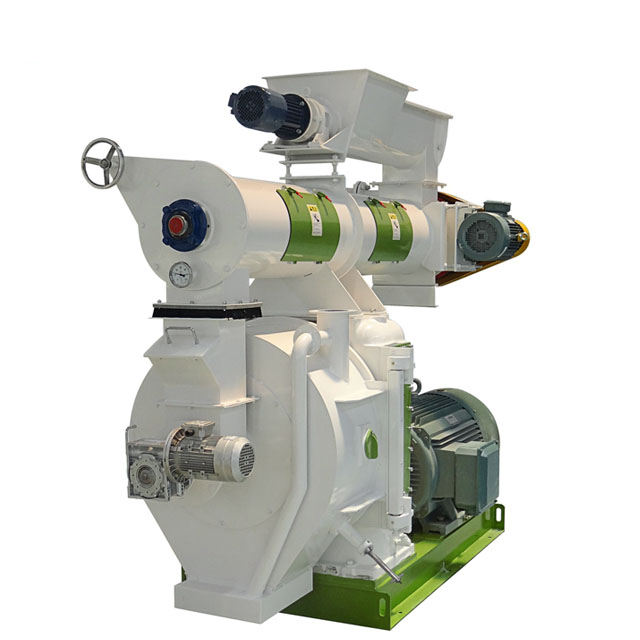
Start with the current, not the breaker
Every motor carries a full load amperage (FLA) on its nameplate. The overload protection is set around that figure, not around whatever the mill happens to draw on a good day. One Chinese mill builder publishes its own setting practice as 105–110% of FLA, which is a sensible band: high enough to ride out a wet patch in the feed, low enough to protect the winding.
So before touching anything, record four numbers: the amperage at the instant of the trip, the motor frame temperature, the feeder setting, and the moisture of the batch that was running. If the trip current sits near the relay setting, the mill was genuinely overloaded and the cause is upstream. If it trips well below that, the relay is misconfigured or the protection is seeing a fault that is not load.
That single distinction saves most of the guesswork. A mill that trips at 100% of FLA is being asked to do too much. A mill that trips at 60% of FLA has an electrical or mechanical problem that has nothing to do with feed rate.
Cause 1: feed that is too wet
Water is a lubricant in the die and a load on the motor at the same time, and the balance is narrow. Biomass Connect puts the workable window at 10–15% moisture for pelletising, with durability and density falling away above it.
What happens above the window is mechanical. Steam flashes in the press channel, the material smears instead of shearing, holes start to plug, and the resistance rises faster than the feeder can be turned down. The amps climb, the die temperature drops because less friction energy is being generated, and the operator — watching a cold die — often does the worst possible thing and increases the feed.
The check is a moisture reading at the mill inlet, not at the dryer outlet. Sample the material that is actually entering the feeder, by hand, once an hour during a wet season. A meter on the dryer discharge tells you what the dryer did; the belt, the buffer bin and the return fines all change it before it reaches the die.
Cause 2: a die that is blocked, worn or wrong
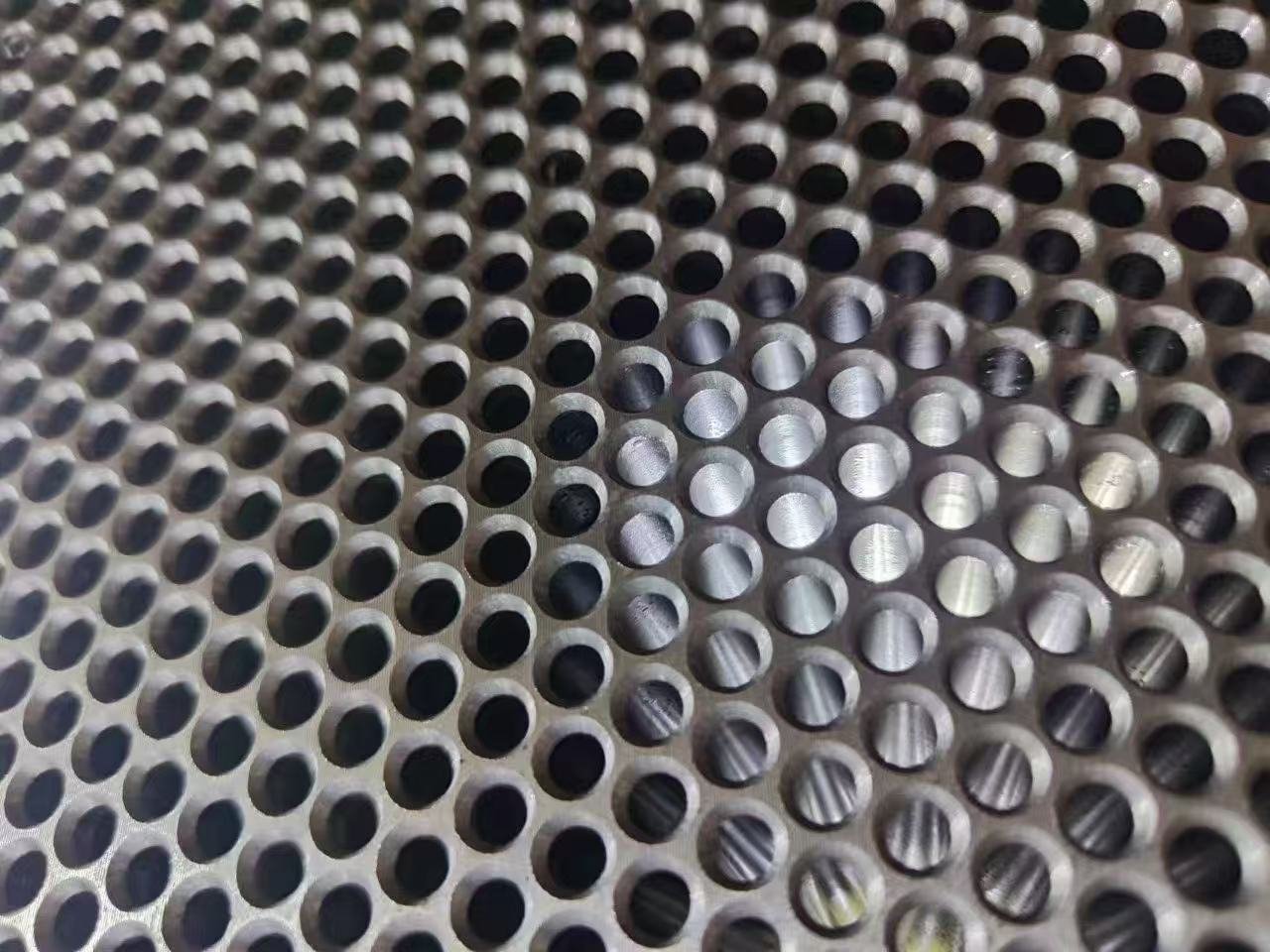
A partially blocked die is the classic slow overload. Half the holes are plugged with hardened material from a previous wet run, so the same tonnage has to pass through a smaller open area. Amps rise, output falls, and the symptom looks exactly like a tired motor.
Wear produces the opposite signature and the same result. Holes that have worn oval let material slip through unevenly, the load surges rather than climbs, and the pellet quality drops. A die that has run its campaign is not a die that runs cheaply.
Then there is the specification error: a die with a compression length that does not suit the feedstock. Too short and the pellet crumbles, so the operator tightens the roller gap to compensate, and the motor pays for it. Too long and the mill is being asked to push material through a channel it cannot clear at that feed rate. Reading the compression ratio properly is worth an hour before the next die order.
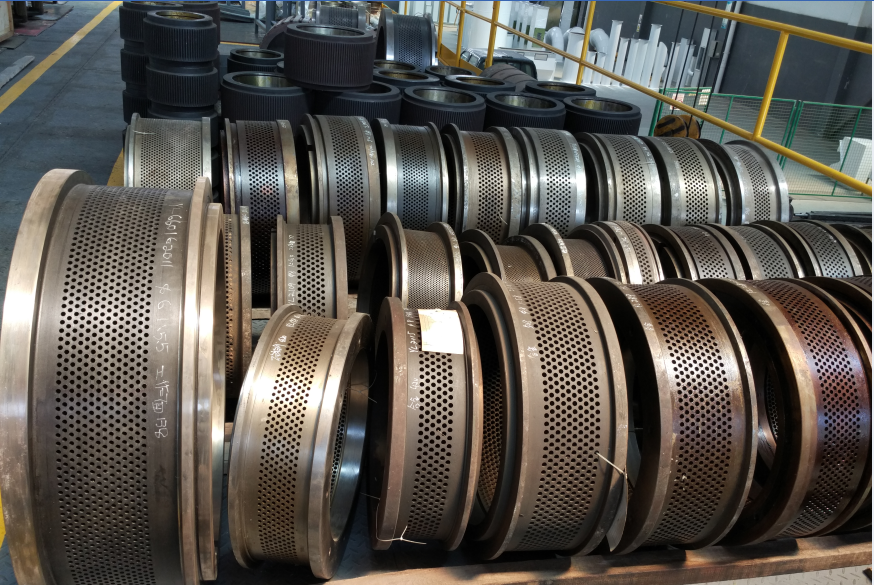
Cause 3: roller gap and roller condition
The gap between the roller shell and the die face sets how hard the mill works for every tonne. Too tight and the rollers are doing metal-to-metal work; the amps sit high even with no feed, and the die face polishes into a mirror. Too loose and the rollers skate: the mill turns, the amps look healthy, and almost nothing comes out, which operators often misread as a feed problem and answer by opening the feeder wider.
Check the gap with the die stationary and the rollers free, and check the roller shells for grooving at the same time. A grooved shell grips unevenly and produces the surging load that trips relays on a mill that looks fine on the gauge most of the day.
Cause 4: starting a mill that is already full
A pellet mill is meant to start empty, with the feeder off. Breakaway torque on an empty die is low. Start the same mill with the die packed after a power cut and the motor is being asked to break a plug of compressed biomass loose — the hardest duty it will ever see, and one that no overload curve is designed to tolerate repeatedly.
Two habits prevent this. First, interlock: the main motor should not start unless the feeder is off and the die is clear, and the feeder should stop instantly on a main motor trip. Second, the startup routine after any unplanned stop — jog the mill, listen, and if the die is full, clean it by hand rather than forcing it. A shear pin or safety coupling on the main drive exists for the same reason; if yours has one, find out where it is before you need it.
Large mills also need help getting the die mass and pulleys up to speed, which is why star-delta and soft starters are common on this duty. Motor suppliers who serve this market describe the empty-start requirement and the shear-pin protection in the same terms, which is a useful cross-check when your own panel does not match. If someone has replaced the starter with a direct-on-line contactor to “simplify” the panel, expect trips on startup and voltage dips that the rest of the plant will feel.
The pellet mill motor selection notes from one motor maker make the same point: the main motor runs near full load for hours, so the starting and protection design is not a detail.
Cause 5: the power supply is not what the nameplate assumes
This is the cause that gets missed because the mill runs fine most of the time. Voltage unbalance is the usual culprit, and its effect on a three-phase motor is worse than most plant engineers expect.
The U.S. Department of Energy’s motor systems guidance is blunt about it: unbalance at the motor terminals should stay below 1%, above that the motor must be derated per NEMA MG-1, and most manufacturers’ warranties are void. The temperature rise penalty follows a simple relation — the increase is roughly twice the square of the percentage unbalance. A motor with an 80 °C rise running at 2% unbalance gains about 6.4 °C. Since insulation life halves for every 10 °C of extra winding temperature, small unbalances compound into short motor life.
The numbers get ugly fast. DOE’s own worked example on unbalanced voltage shows a 3% unbalance adding around 18 °C to the winding and cutting expected insulation life to roughly a quarter, and a 5% unbalance producing a rise larger than the motor’s design margin.
| Check | Target | Why it matters on a pellet mill |
|---|---|---|
| Voltage unbalance at motor terminals | Below 1% (DOE recommendation) | Above 1% the motor must be derated; heat rises with the square of the unbalance |
| Winding temperature rise penalty | Rise × (1 + 2 × (%unbalance)²/100) | 2% unbalance adds about 6.4 °C to an 80 °C rise |
| Insulation life | Halves for each 10 °C above rated | A mill running hot all day fails in months, not years |
| Overload relay setting | About 105–110% of FLA | Lower settings trip on normal wet patches; higher settings protect nothing |
| Phase current balance under load | Even across three phases | Uneven current with balanced voltage points to the motor or its cabling, not the supply |
Unbalanced voltage has ordinary causes: single-phase loads distributed unevenly across the same transformer, a transformer bank too small for the load, a failing power factor correction capacitor, a loose terminal. None of them are exotic, and all of them are invisible until someone measures. A clamp meter and ten minutes at the terminals will tell you more than a week of resetting the relay.
Cause 6: the motor is being cooked, not overloaded
An overload trip and an overheating trip look identical on the panel. The difference is that one is about torque and the other is about heat removal.
Pellet plants are dusty places, and the fan cover on a TEFC motor is a dust trap. A mat of sawdust over the cooling fins can take a motor that is running at 85% load and push the winding past its class limit. Add a motor mounted in a corner with no airflow, or a summer ambient above the motor’s rated ambient, and the protection trips on temperature rather than current.
The checks are physical: fins clear, fan intact, fan cowl not crushed, motor feet not buried in spillage, ambient at the motor and not at the door of the building. Then look at the terminal box for discoloured insulation and check the winding resistance if you have the instrument. A motor that trips on hot afternoons and runs all night in winter is telling you about cooling, not load.
Triage order that works in the field
When a mill trips and the cause is not obvious, work in this order. It moves from cheap and fast to slow and expensive, and it avoids the usual mistake of pulling the motor before checking the feed.
| What you see | Most likely cause | First action |
|---|---|---|
| Amps climb gradually over minutes, die temperature falls | Feed too wet, or feed rate too high for the die | Moisture sample at mill inlet; reduce feeder |
| Amps high with feeder nearly closed, no output | Blocked die holes or roller gap too tight | Stop, clear die, check gap |
| Amps surge and settle repeatedly | Worn die holes or grooved roller shells | Inspect die and rollers; compare against a new die |
| Trips only on start, after a stop | Die full of material, or starter bypassed | Clear die by hand; check starting method |
| Trips at the same time of day, load normal | Cooling, ambient, or supply unbalance | Clean fins, measure terminal voltages |
| Trips at 50–70% of FLA | Relay setting, CT, or winding fault | Verify relay and current transformer before touching the motor |
What good operation looks like afterwards
A mill that is sized and fed correctly runs at 85–95% of FLA for hours, with amps that move in a narrow band. That is not a mill being abused; it is a mill being used. The control that keeps it there is the feeder, driven from the main motor current, so the machine backs off before it trips instead of after.
Log the amps at the start of each shift, alongside moisture and die hours. Three weeks of that log will show a blocked die or a wearing roller before the relay does, and it gives you something to show a supplier when a capacity claim and a plant reality disagree. Our pellet mill troubleshooting guide covers the other faults that follow the same pattern, and the spare parts list covers what to keep on the shelf so a die change does not stop the line for a week.
Repair the motor or replace it: four tests
Eventually a motor does fail, and the decision is usually made on price. It should be made on these four points instead.
| Test | Repair the winding | Replace the motor |
|---|---|---|
| Winding resistance and insulation | One phase shorted, insulation otherwise sound, no history of overheating | Burnt through, or two or more phases affected |
| Overload history | Single event with a clear process cause that has been fixed | Repeated trips with discoloured windings — the damage is cumulative |
| Mechanical condition | Bearings, shaft and frame within tolerance | Shaft wear at the pulley or coupling, cracked frame, corroded cooling path |
| Cost and downtime | Rewind quoted well below a new motor and the mill is needed this week | Rewind cost close to a new unit, or the frame is old enough that spares are a problem |
One caution on the first row. A rewind restores the winding, not the cause. If the mill tripped for six months on wet feed and the motor was rewound twice, the third failure is a process problem wearing a motor costume. Fix the moisture control, the die and the voltage unbalance, and the next motor will last. Ignore them and you will be buying a motor a year, which is a far more expensive habit than a $400 moisture meter and a clamp meter.
If you are specifying a new mill and want the electrical side sized correctly from the start, tell the supplier your supply voltage, your transformer capacity and your annual running hours. On a 2 t/h line the main motor is the largest single load on site, and a mill chosen without those three numbers is a mill chosen on the brochure.