
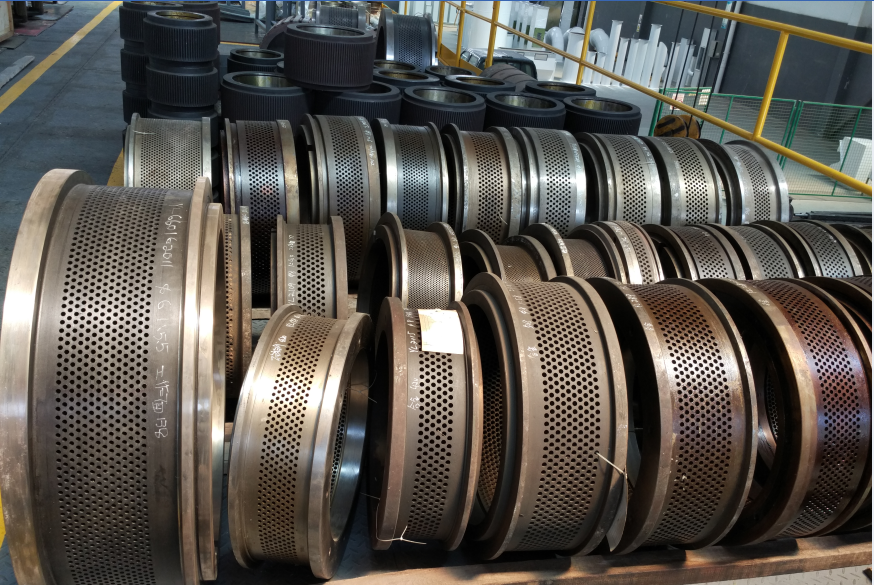
Nine times out of ten, a pellet mill that “lost capacity” has not lost anything. The die has, or the feed has, or the operator has been running the mill at a gap that was right in March and is wrong in July. The machine is usually the last thing to blame and the first thing to be blamed.
These are the five faults we get called about most often, in the order they show up on a new line. Each one has a signature you can hear, see or smell before you reach for a spanner.
1. The die blocks and material smears instead of extruding
What you notice: output falls away over a shift, the pellets come out hot and shiny but soft, the ammeter climbs, and eventually material stops passing through and starts baking onto the die face.
Nearly always this is moisture. Feed above the working window and the die cannot generate enough friction heat to plasticize the lignin; instead the water flashes into steam at the hole entrance and the pellet expands as it leaves. Below the window, the material is too dry to bind and the die runs hot with no lubrication. Wood pelletizing wants roughly 10–15% moisture at the die (Biomass Connect), and the top of that range is not the same as the bottom.
The second cause is die condition. A die that has been sitting idle for a month with material in the holes will have corroded bores. The third is feed particle size: a sudden batch of coarse chips that the hammer mill did not reduce will bridge at the feeder and starve the die intermittently, which reads as blocking.
What to do before you pull the die: take three moisture samples across the shift, check the feeder for bridging, and look at the ammeter trend. If moisture is in range and the amps are still climbing, run a small batch of oily material through to polish the die face. If output recovers and then falls again within hours, the die is worn out of tolerance and needs replacing, not polishing.
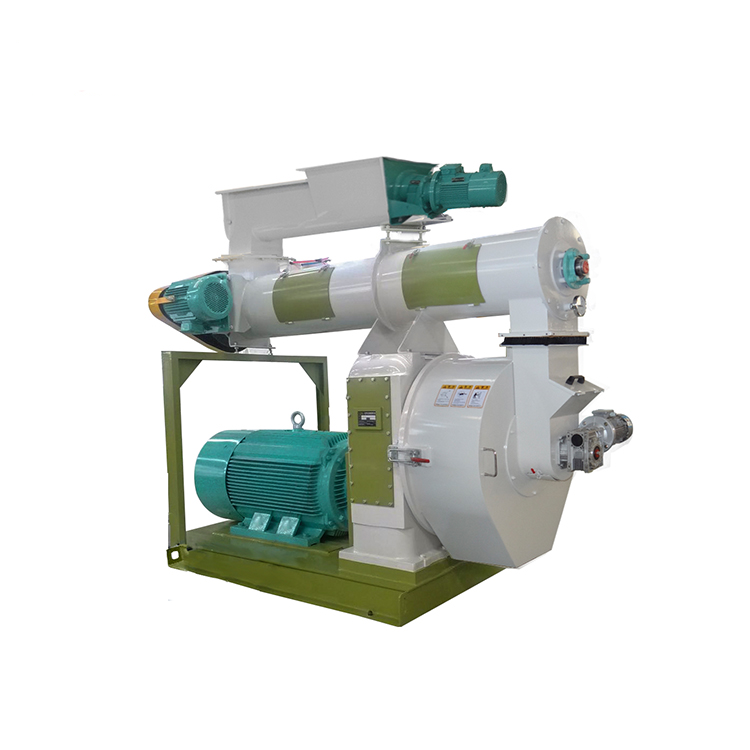
If your line has a conditioner, use it deliberately. A short retention time with a little added moisture stabilises the feed going into the die and smooths out the swings that a dryer leaves behind. Operators often run the conditioner bypassed because it was bypassed on the day they were trained, and then spend the next year fighting a die that blocks every afternoon.
2. Roller bearings fail long before the die does
What you notice: a rumble that was not there last week, grease weeping past the seal, one roller running noticeably hotter than the others, or metal in the grease sample.
Rollers live in the worst possible environment: hot, abrasive, under heavy radial load, and sealed against dust that is finer than most seals are designed for. Three things shorten their life more than anything else. Over-greasing, which blows the seal and lets dust in. Under-greasing, which cooks the bearing. And running with a loose roller gap, which lets the roller bounce and hammer the race.
Replace rollers as a set, not one at a time. A new roller next to two worn ones will carry more than its share of the load and fail early, and you will be back inside the machine within weeks.
The check that pays for itself: every shift, touch each roller housing with a gloved hand or a contact thermometer and write the number down. A roller that runs 10 °C hotter than its neighbours is telling you something. You will catch the failure before it welds itself to the shaft.
3. The die wears unevenly and output drops on one side
What you notice: the die face shows a crescent of polished, worn track on one side and untouched surface on the other. Pellets from that side are shorter or softer. Amps are normal but tonnage is down.
Uneven wear means the feed is not distributing evenly around the die. On a horizontal ring die mill, material enters at one point and has to be thrown around the full circumference by the rollers; if the feeder is off-centre, or the distributor plate is worn, or the feed rate is too low for the mill to spread material properly, one sector does all the work.
On a vertical ring die mill the feed falls in by gravity across the die face, which is why verticals wear more evenly on light, fibrous wood dust. They are not immune, though: a worn distributor or an off-level machine will still bias the load.
Fix the feed before you blame the die. Check the distributor, run at a feed rate that keeps the die face covered, and confirm the machine is level. Then rotate or replace the die. A die worn into a crescent cannot be recovered by turning it around — the holes are tapered and the taper only works in one direction.
4. Fines climb and durability falls off a cliff
What you notice: more dust in the cooler discharge, more material returning from the screener, bags that look half empty at the bottom, and customers complaining about broken pellets.
Durability is a chain, and the weakest link decides it. Moisture at the die, die compression ratio, cooling time, drop height into the bag, and how long the pellets sat in a silo before packing all move the number. ENplus A1 asks for 98.0% mechanical durability and limits fines to 1.0%, or 0.5% for bagged product (ENplus). Producer programmes run by associations such as the Wood Pellet Association of Canada test the same properties and publish how they do it, which is useful if you want a second opinion on a lab result. Once you are chasing those thresholds, small process errors become visible.
The usual culprits, in the order we find them: pellets leaving the cooler still warm, so they sweat in the bag; a screener with a torn screen passing fines into the finished product; and a die that has been polished smooth by a long run of dry material, so the pellets never get the surface pressure they need. Our earlier piece on why wood pellets crumble goes deeper into the chemistry, but start with temperature and screens.
5. The main motor trips under load
What you notice: the mill runs fine at low feed and trips the overload as soon as you push toward rated output. Resetting works, then it trips again at the same point.
Five causes, and you can rule them out in this order. Feed too wet, so the die is doing lubrication work with water instead of friction. Feed too coarse, so the mill is grinding rather than extruding. Die gap too tight, so the rollers are pre-loading the die. A die with the wrong compression ratio for the material, which is common when a plant switches feedstock without changing dies. And finally, a genuine electrical problem: a failing contactor, a loose lug, or a supply that cannot carry the starting current.
Do not solve tripping by raising the overload setting. That converts an electrical protection event into a mechanical failure, and gearboxes cost more than contactors.
| Fault | Signature | First check | Permanent fix |
|---|---|---|---|
| Die blocking | Amps climb, pellets shiny and soft, output fades | Feed moisture across the shift | Dryer control, die replacement, feeder calibration |
| Roller bearing failure | Rumble, hot housing, grease weeping | Temperature of each roller housing | Sealed bearings, correct grease volume, roller set replacement |
| Uneven die wear | Crescent wear pattern, low tonnage at normal amps | Distributor and feed spread | Distributor repair, higher minimum feed rate, die change |
| Fines and low durability | Dust in cooler, returns from screener | Pellet temperature at bagging | Cooling time, screen integrity, die surface condition |
| Motor tripping | Trips at the same load every time | Moisture, particle size, roller gap | Feed conditioning, die compression ratio, electrical inspection |
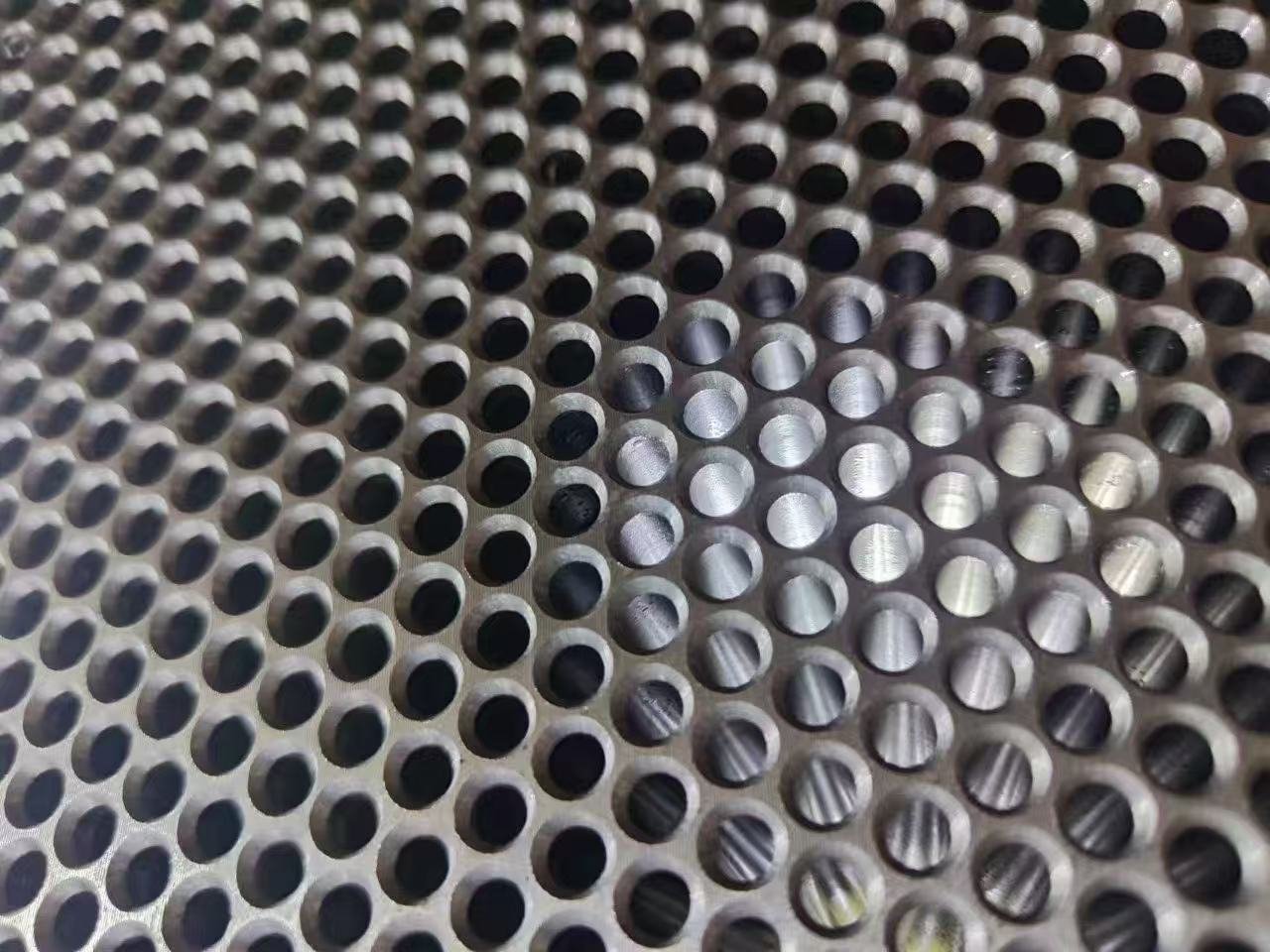
Diagnose in the right order
Most bad diagnoses come from starting at the machine. Work backwards instead, because everything upstream of the die shapes what the die has to do.
Material first. Moisture, species, particle size, contamination. Two hours with a moisture meter and a sieve explains more faults than a week with a spanner.
Feed system second. Is the feeder delivering a steady, even flow? Is the distributor worn? Is the conditioner adding what it should?
Die and rollers third. Wear pattern, gap, hole condition, roller temperatures.
Drive and electrics last. Motor current, contactors, gearbox oil, coupling alignment.
If you are running a line that has never hit its rated output, the fault is probably not in this list at all. It is in the specification — the mill was sized on a different material or a different moisture. Our article on five ways to raise pellet mill output covers that case.
| What you see | Die condition | Roller condition | Action |
|---|---|---|---|
| Output steady, amps slowly rising over weeks | Holes polished, bore worn oversize | Normal | Plan a die change; check compression ratio |
| Output drops sharply, amps spike | Material baked into hole entrances | Possible flat spot | Clean the die, check feed moisture, inspect rollers |
| Soft pellets, high fines | Face glazed and smooth | Roller surface polished | Replace die and rollers as a set |
| Vibration and rumble | Uneven wear crescent | One bearing rough | Stop the mill; inspect bearing and shaft |
| Pellets with cracks along the length | Taper worn, hole bell-mouthed | Normal | Die at end of life; replace |
What to write in the maintenance log
The plants that run for a decade without drama are not the ones with the best machines. They are the ones where somebody writes things down. A single page per shift, five columns, and you will spot a wear trend two weeks before it becomes a stoppage.
| Column | Why it earns its space |
|---|---|
| Tonnes produced and running hours | Gives you tonnes per hour, the only honest measure of machine health |
| kWh meter reading | Turns into kWh per tonne, which rises before output visibly falls |
| Feed moisture (three samples) | Explains most of the variance you would otherwise blame on the mill |
| Roller housing temperatures | Catches bearing failure early, when it is a bearing and not a shaft |
| Die hours and tonnage since change | Builds your own wear curve on your own material, better than any supplier estimate |
The kWh column is the one most plants skip and the one that pays best. Energy per tonne is the earliest visible sign of a die going out of condition, because it starts climbing while tonnage still looks normal. Research on pellet presses has measured specific energy consumption anywhere between 75 and 275 kWh per tonne depending on feedstock moisture and press speed (US DOE OSTI), so the absolute figure tells you less than the trend on your own machine. A line that has drifted well above its own baseline is asking for attention long before the pellets look wrong.
Two habits make the log worth keeping. Write the die’s tonnage total on the die itself with a paint marker, so nobody has to guess. And review the sheet weekly with the operator who fills it in, because the person running the mill usually knows what changed before the numbers do.
Most of the faults above are avoidable with a die matched to the material, a hammer mill that actually delivers the particle size the die expects, and an operator who has been taught what normal sounds like. If a line keeps failing in the same place, the fix is usually a spare part and a training hour, not a new machine.