
The ENplus scheme now covers 1,294 certified companies worldwide, and its administrators have dealt with 1,555 fraud cases to date (ENplus official statistics). Those two numbers tell you a lot about what the first site audit feels like. The scheme is big enough that inspectors have seen every shortcut twice, and strict enough that fraud is actively hunted — which is why the audit is evidence-driven, not trust-driven.
Here is the uncomfortable pattern: most producers who stumble in their first ENplus inspection have acceptable pellets. Their durability reads fine, ash is in spec, the press runs well. What fails is the paper trail around the pellets — the calibration certificates, the sampling records, the fines separation at the loading shovel, the label stock locked in a cabinet. Product quality gets you certified; process evidence keeps you certified.
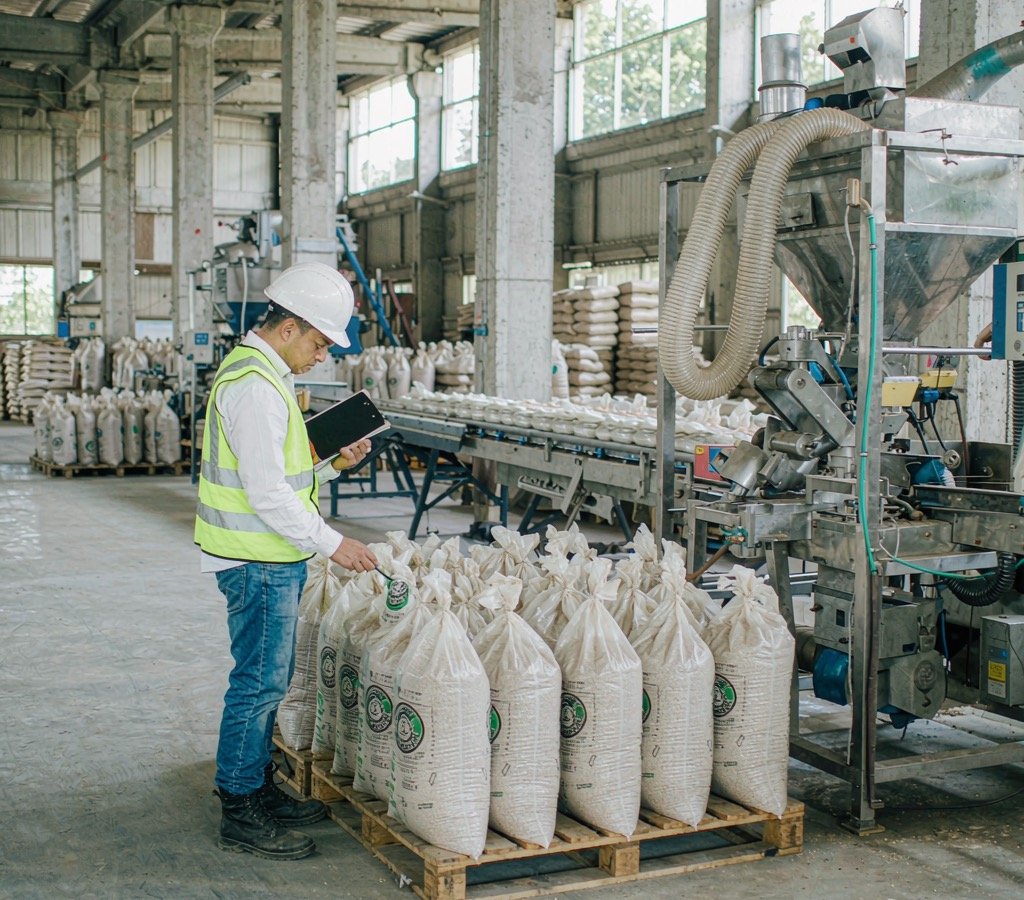
What the inspector is actually checking
An ENplus production audit covers raw material sourcing, production, storage, bagging, quality control, staff competence, complaint handling and documents — the whole chain, inspected by an inspector from a listed inspection body on a schedule set by the scheme (ENplus scheme description). The product requirements themselves are anchored in ISO 17225-2, and ENplus tightens several of them on top.
| Parameter | ENplus A1 | ENplus A2 | ENplus B |
|---|---|---|---|
| Mechanical durability | ≥ 98.0% | ≥ 97.5% | ≥ 96.5% |
| Ash content | ≤ 0.7% | ≤ 1.2% | ≤ 2.0% |
| Moisture | ≤ 10% | ≤ 10% | ≤ 10% |
| Bulk density | 600–750 kg/m³ | 600–750 kg/m³ | 600–750 kg/m³ |
| Fines (bags / bulk) | ≤ 0.5% / ≤ 1.0% | ≤ 0.5% / ≤ 1.0% | — |
Values follow the ENplus quality classes built on ISO 17225-2 (the standard’s limit structure is reproduced in the Materials review of ISO 17225-2 pellet parameters; the A1 durability tightening and fines limits come from the ENplus scheme documents below). If your internal numbers already sit inside this table, congratulations — the hard part is everything else.
The six places first-time producers fail
None of these are exotic. Each one exists because a real requirement in the handbook has no paper behind it when the inspector asks.
1. Testing frequency that looks good in theory and collapses in the logbook
The ENplus handbook Part 3 sets how often each parameter must be measured internally, on which lot, and with which method — and how external lab results must line up with your own (ENplus Handbook Part 3). Producers fail here in two ways: gaps in the record (“we missed a week in August”), and methods that quietly drifted from the referenced ISO procedures. The inspector reads the log against the calendar, and a sampling plan that exists only in someone’s head scores the same as no plan.
The fix is a sampling schedule pinned to production events, not to memory: every X tonnes, every shift, every silo change — whatever the handbook requires for your scale, written down and signed. Our in-house durability testing guide shows what a defensible batch record looks like for the one test that matters most.
2. Scales that work but cannot prove it
Bagged ENplus product is sold by weight, so the handbook requires scale verification and records of the checks (the scheme’s bagging requirements include weighing accuracy verification — ENplus Handbook, bagging provisions). Plants fail this not because their scales drift, but because nobody kept the calibration certificate current or logged the routine checks the inspector expects to see stamped and dated.
A working setup looks boring: certificates valid, check weights present, a logbook where operators initial a verification every day or shift as required. Ten minutes of paperwork a week buys a clean answer to one of the audit’s most predictable questions.
3. Bulk loading without fines separation
ENplus technical standard ST 1001 is unusually specific about the loading point: bulk loading facilities must include fines separation that cuts fines content from around 10% down to below 1% before loading, hoppers emptied regularly — on the order of every 200 tonnes — and product kept below about 40 °C at loading (ENplus ST 1001 requirements). A plant that scoops bulk pellets straight from the pile into the truck fails this requirement before the inspector even takes a sample.
If your business plan includes certified bulk deliveries, the screener, the surge hopper and the temperature discipline are not optional equipment. We walked through screener selection in the fines screening guide — it doubles as the ENplus compliance shopping list.
4. Storage that mixes lots and loses traceability
The handbook requires that certified product stays identifiable from production to delivery: separate storage for certified and non-certified lots, records linking each delivery to its production lot and test results, and discipline about what goes in and out of the certified silo. Failures here are usually architectural — one shared silo, no mark-out procedure, a shovel that serves both piles. The inspector’s question is simple: point to this bag’s birth record. If tracing a bag to its batch takes more than a few minutes of document hunting, the answer is no.
Storage design details — silo layout, first-in-first-out, temperature and off-gassing management — are covered in our pellet storage guide, and most of the same layout principles that protect quality also produce the audit evidence.
5. Label and seal control
With 1,555 fraud cases handled by the scheme, labels and quality seals are treated as controlled assets, not stationery (ENplus official statistics). Producers fail here by loose control: seal numbers not reconciled against production, bags printed before certification was granted, old artwork in circulation, or a bagging service provider operating outside the scheme’s rules. The handbook’s requirements on seal use and the register of who may print what exist precisely because loose labels are how counterfeit product enters the market.
Treat seal stock like cash: numbered, counted, issued against signatures, and reconciled monthly. It is the same discipline you would want from a franchise partner printing your brand.
6. No complaints system — or one nobody reads
Complaint handling is a scheme requirement, and inspectors look for evidence the loop closes: complaints logged, investigated, answered, and fed back into process changes. Producers fail this one by having a mailbox instead of a procedure. The pattern that satisfies an audit is small: a complaint register with dates, the investigation note, the reply, and — the part auditors like best — the corrective action that changed a procedure or a measurement after the third complaint about the same thing.
The raw material question underneath everything
ENplus product requirements include constraints on raw material, and the sustainability paperwork that supports it (FSC and PEFC chain-of-custody certificates are the common evidence for certified fibre origin — FSC and PEFC both run the certification systems most mills reference). Producers buy clean fibre and then cannot document it: no supplier declarations, no chain-of-custody number on file, invoices that say “wood” and nothing else. An inspector who cannot trace fibre to source treats the entire quality story as unsupported.
Collect supplier declarations once, keep them current, and file them where the audit will look. The SBP certification guide goes deeper on fibre sourcing evidence for the industrial export side, and the same documents serve ENplus file reviews.
How the audit day usually runs
Expect an opening meeting, a walk of the plant in process order, document review interleaved with floor observations, product sampling, and a closing meeting where findings are classified. Inspectors sample product on site during the visit, so the state of your plant — not the state of your PowerPoint — is what gets sampled. That is the practical argument for a mock audit two weeks before the real one: walk the same route, ask the same questions, pull the same files, and note every place the answer required “let me find that”.
Two national associations publish helpful plain-language material for members preparing for certification — the German pellet institute DEPI and, for North American context, the Wood Pellet Association of Canada. Neither replaces the handbook; both make it less lonely.
The audit in one sentence
The inspector is not checking whether you make good pellets — your lab results already argue that. The inspector is checking whether you can prove, with records produced by procedures rather than memory, that every bag leaving the gate deserved the seal on it. Plants that internalise that framing pass their first audit; plants that treat the handbook as paperwork scramble for years.
Audit-day document quick-pull list
Before the inspector arrives, have these retrievable in minutes, filed by where they live:
| Location | Document | Inspector’s question it answers |
|---|---|---|
| Office | Certificate, license contract, handbook in force | Are you operating under the current version? |
| Office | Internal test log + external lab reports | Do frequencies match the handbook? |
| Office | Calibration certificates (scales, moisture, thermometers) | Do your instruments trace to anything? |
| Office | Complaint register and investigation notes | Does the loop close? |
| Office | Seal/label issue log and reconciliation | Where did 40,000 seals go? |
| Office | Supplier declarations, FSC/PEFC chain-of-custody file | Can you trace the fibre? |
| Lab | Durability tumbler records, sampling plan | Is testing tied to lots, not to mood? |
| Lab | Sieved fines records per batch | Do you watch the parameter that customers feel? |
| Plant floor | Silo map with certified/non-certified status | Where does certified product physically live? |
| Plant floor | Lot traceability demo: one bag to its batch | Can you walk the chain live? |
| Loading bay | Screener service log, hopper emptying record | Does the ST 1001 separation actually run? |
| Bagging line | Scale check logbook, check weights | Is every bag’s weight verified? |
Walk the list yourself, timed. If any row takes longer than five minutes to produce, that row is your first audit finding — better found by you than by the inspector. And when the certificate arrives, the obligations do not stop: annual surveillance continues, and the requirements evolve, which is why the ENplus A1 overview and the ISO 17225-2 grade explainer both stay worth rereading each year.