
Palm kernel shells pile up fast. One mid-size crude palm oil mill in Sumatra can push out a truckload of shells every shift, and most of it ships out raw, loose, in bulk grabs. So when a buyer in Japan or an engineer at a Thai boiler plant asks for “PKS pellets” instead of raw shells, mill owners and traders naturally ask the same question: is pelleting palm kernel shell worth the money, or is it a machine someone talked me into?
This guide is the straight answer we give customers who send us shell samples for testing. It covers what PKS actually is, why the raw shell trade is so much bigger than the pellet trade, what changes chemically and mechanically when you compress a shell into a pellet, and which line configuration handles this material without eating dies. No marketing gloss — if a PKS pellet line is the wrong call for your situation, this article will tell you that too.
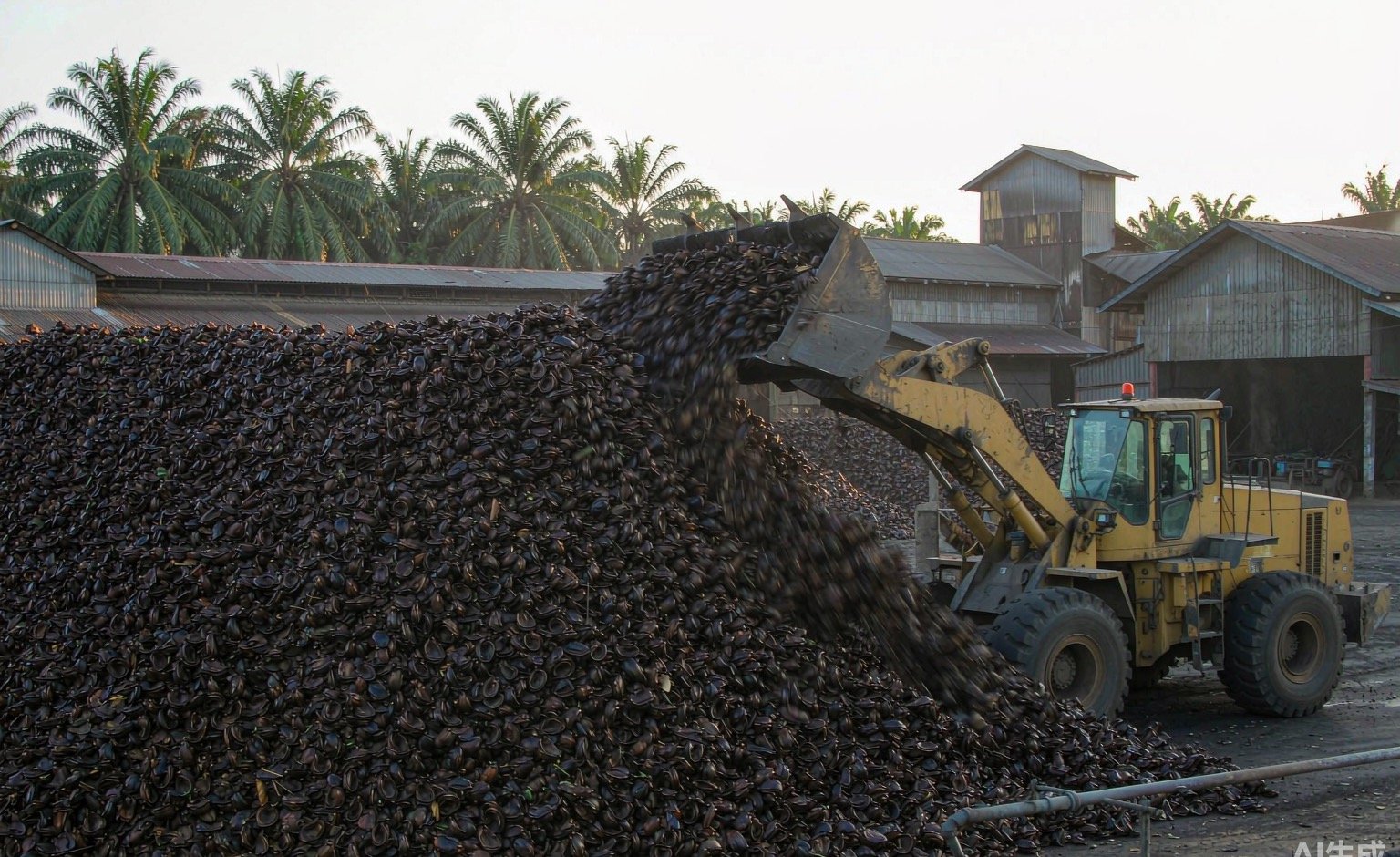
PKS 101: what a palm kernel shell actually is
The oil palm fruit gives up three products in sequence. The mesocarp yields crude palm oil. Inside the fruit sits the palm kernel, and after the kernel is cracked to extract palm kernel oil, the hard outer wall that protected it — the endocarp — is left over. That hard, dark-brown, half-moon-shaped fragment is the palm kernel shell, abbreviated PKS almost everywhere in the trade.
Because shells are a by-product of CPO milling, their volume tracks palm oil output. The Indonesian palm biomass association APCASI puts PKS production at roughly 23% of CPO production by weight, which is why the big palm countries — Indonesia and Malaysia above all — dominate supply. APCASI’s market intelligence page documents the scale: Indonesian PKS production was forecast to reach 14.2 million tonnes in 2024, with about 4.97 million tonnes — roughly 35% — earmarked for export.
What makes shells interesting as a fuel is what they are physically: the densest, hardest, driest part of the palm fruit. They arrive at the mill gate already dry from sun exposure on the mill yard, they flow reasonably well in bulk handling, and they carry a genuinely high energy content for an agricultural residue. A 2025 study in the FUDMA Journal of Sciences that pelleted eight tropical agricultural wastes under identical conditions measured palm kernel shell pellets at 20.1 MJ/kg gross calorific value with 2.4% ash — the best fuel numbers of the entire set, ahead of coconut shell and far ahead of rice husk (FUDMA Journal of Sciences, comparative pellet study).
Hardness cuts both ways, though. The same toughness that makes shells a clean, dense fuel makes them punishing on size-reduction and pelleting equipment. We will come back to that.
The raw shell trade dwarfs the pellet trade. Here’s why.
If you follow the biomass trade press, you will notice that almost all PKS moves as raw shells, not pellets. The numbers confirm it. Reporting by Argus Media puts Indonesian PKS exports at roughly 4.8 million tonnes in 2024, with about 4.4 million tonnes going to Japan and the balance mainly to Thailand and Singapore; South Korea has almost stopped importing PKS since the second half of 2023 (Argus Media, biomass market news).
Japanese utilities buy raw shells for coal co-firing and dedicated biomass plants because the shells already meet their fuel specs without any densification. Loose shells pour into bulk carriers, discharge by grab, and feed fluidized-bed and grate boilers that accept particles of widely varying size. For that buyer, a pellet adds cost without adding value.
That is the first thing every prospective PKS pellet producer should internalize: you are not competing with wood pellets. You are competing with the raw shell trade, and the raw shell trade is mature, cheap, and well organized. A PKS pellet line only makes sense when the buyer on the other side of the table has a reason to prefer a pellet — and pays for it.
What changes when you pellet a shell
Pelleting does not change the chemistry of the shell. It changes the shape, the density, and the handling behavior — and for many industrial buyers, that is exactly what they need. The table below puts measured PKS pellet data next to the two standards buyers usually mention.
| Property | PKS pellets (measured, 2025 study) | ENplus A1 wood pellet | ISO 17225-6 Class A (non-woody) |
|---|---|---|---|
| Calorific value | 20.1 MJ/kg gross | ≥4.6 kWh/kg net (≈16.6 MJ/kg) | declared per lot |
| Ash content | 2.4% | ≤0.7% | ≤6.0% |
| Mechanical durability | not reported in study | ≥98.0% | ≥97.5% |
| Moisture | <12% (all samples) | ≤10% | ≤12% |
Sources: PKS pellet figures from the 2025 FUDMA Journal of Sciences comparative pellet study; ENplus A1 limits from the ENplus Handbook v3.0, Part 3; ISO 17225-6 limits per the ISO 17225-6:2021 standard summary.
Three observations jump out of that table.
First, the energy content is excellent. A gross calorific value of 20.1 MJ/kg is comfortably above what buyers expect from wood pellets. Shells are lignin-rich and dense; they burn hot.
Second, ash at 2.4% disqualifies PKS pellets from ENplus certification forever. ENplus is a wood pellet scheme, and its A1 class caps ash at 0.7%. You cannot blend or polish your way around that with a pure shell pellet. Anyone who tells you a PKS pellet can carry the ENplus A1 logo has not read the handbook (see the ENplus scheme itself).
Third, PKS pellets fit ISO 17225-6 comfortably. That standard covers non-woody pellets, including fruit biomass — which is exactly what a palm kernel shell is. Class A allows up to 6% ash; the measured 2.4% sits well inside. If your buyer asks for a certification path, ISO 17225-6 is the honest answer, not ENplus.
Who actually buys PKS pellets — and why
In our experience fielding inquiries, PKS pellets interest four kinds of buyers:
1. Boiler operators with pneumatic or screw feeding. Loose shells bridge, segment, and dose unevenly. A plant that meters fuel by screw conveyor or injects it pneumatically wants uniform particle geometry. A 8–10 mm pellet doses predictably; a mix of half-shells and fragments does not.
2. Buyers without bulk-grab infrastructure. Not every industrial end user has a grab crane and a stockyard. Smaller boilers running on bagged or big-bag fuel can handle pellets far more easily than loose shells.
3. Traders consolidating volume for long-haul logistics. Densified fuel loads more tonnes per container or per truck, which matters once the haul gets long. (This argument is strongest for palm fiber and EFB, which are fluffier still.)
4. Producers moving into torrefied “black” pellets — more on that below, because torrefaction plus pelletization is where PKS becomes genuinely premium.
If your target buyer is a large Japanese utility running fluidized beds on raw shells, sell raw shells. Do not build a pellet plant for that customer.
The three problems that kill badly planned PKS pellet lines
We test shell samples for customers regularly, and the same three failure modes show up in projects that stall. All three are preventable at the planning stage.
Problem 1: abrasion that eats dies and rollers
The shell is the hardest tissue the palm fruit produces, and like rice husk it carries mineral content that is brutally abrasive once the material is crushed to pelleting fineness. Clean pine sawdust is gentle on a die; crushed shell is not. In practice this means shorter die and roller life than a sawdust line of the same throughput, and it means the compression ratio and die material deserve more attention than they would on a wood project. Budget for wear parts as a real cost line from day one — this is the single most common omission we see in customer financial models. (Our ring die page explains how compression ratio and hole geometry are matched to the raw material.)
Problem 2: skipping proper size preparation
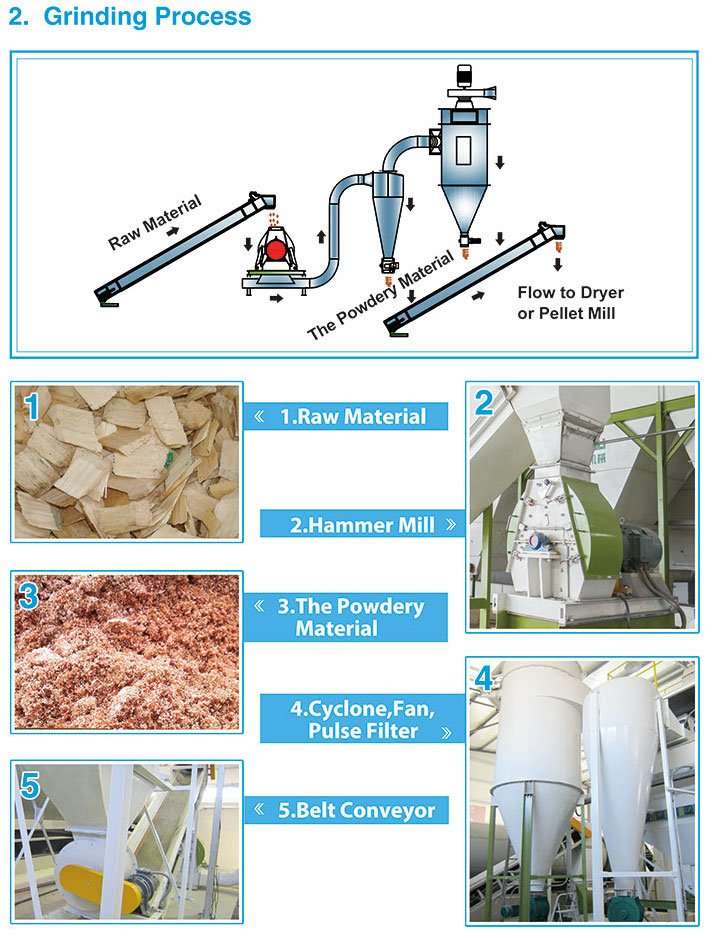
Whole shells will not pellet. They must be reduced to a fine, uniform particle first, and because shells are hard and half-moon shaped, a single pass through an ordinary grinder is usually not enough. A workable preparation chain is a coarse crusher or hammer mill pass, then a fine grinding pass with a smaller screen. Trying to shortcut this stage is how projects end up with brittle, high-fines pellets and throughput far below the machine’s rating. Our YHM series hammer mill is built exactly for this duty — shells, palm fiber, rice husk, and similar fibrous-hard residues — with a U-shaped grinding chamber and interchangeable screens for coarse and fine passes.
Problem 3: ignoring what the ash does downstream
At 2.4% ash, a PKS pellet produces roughly three times the ash of an ENplus A1 wood pellet. That is fine for an industrial boiler with proper ash handling, and it is a warranty problem for a residential stove. Match the fuel to the boiler, get the buyer’s ash spec in writing before you order equipment, and you will avoid the most expensive kind of surprise — a finished product nobody can burn.
Moisture, density, and the logistics argument
Raw shells have one more property that shapes the whole trade: they are light for the energy they carry. A truckload of loose shells wastes a lot of its payload rating hauling air, and shell stockpiles left in tropical rain reabsorb moisture fast, which drags their calorific value down exactly when a buyer is testing samples at the discharge port.
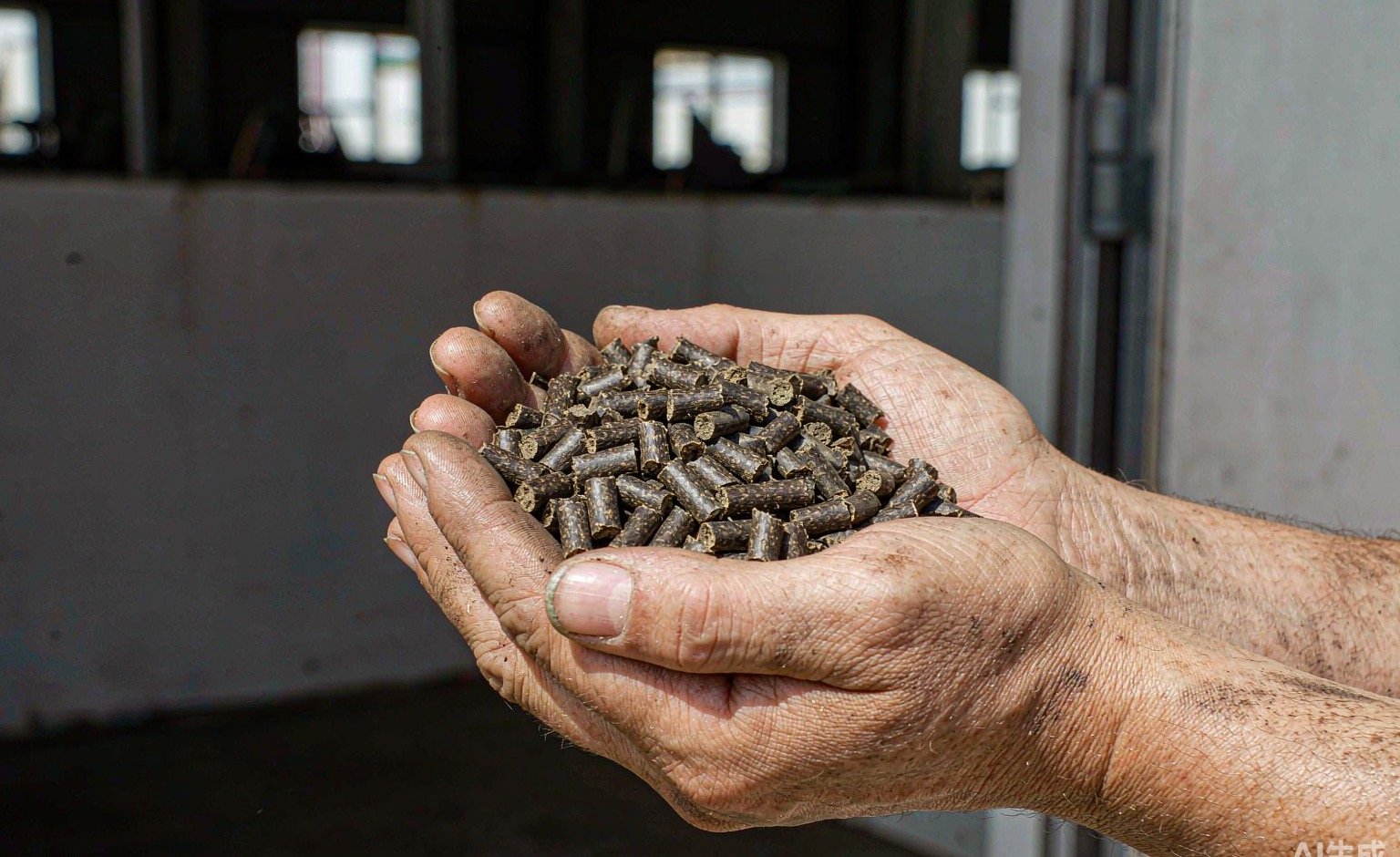
Pelleting attacks both problems at once. Compressing shell particles into a dense cylinder multiplies the energy per truckload, stabilizes the material against moisture pickup (a dense pellet exposes far less surface than a pile of half-shells), and makes the fuel flow through silos, hoppers, and screw feeders without bridging. This is the same physics that built the global wood pellet trade, and Bioenergy Europe’s latest statistical report documents where it leads: global pellet production hit 53.5 million tonnes in 2025, up 10% year on year, with Europe alone consuming roughly 70% of world demand (Bioenergy Europe statistical report press release). Densification is not a cosmetic step — it is the reason biomass fuel can travel thousands of kilometers economically at all.
For PKS specifically, the logistics argument is strongest in the middle distance. Inside a 50-kilometer radius of the palm mill, loose shells usually win — haulage is short, and the buyer’s handling equipment is already built around loose material. Across an ocean, raw shells in bulk carriers win again, because the buyer has grab cranes and fluidized beds. The zone where pellets earn their keep is the awkward middle: buyers at a few hundred kilometers, container-scale volumes, and end users whose feeding systems want uniformity. Know which zone your buyer sits in before you price the project.
Die selection: the detail that decides whether the project works

Between the raw material and the finished pellet sits one component that decides most of the outcome: the ring die. Die geometry — hole diameter, effective hole length, and the compression ratio those two produce — is matched to the raw material, not chosen from a catalog at random. Sawdust, shell, rice husk, and palm fiber each behave differently under compression, and a die tuned for pine sawdust will not give its best result on crushed shell.
With shells, three factors push the die conversation harder than usual. First, abrasion: mineral content in the shell grinds on die and roller surfaces, so die material and wall thickness deserve a deliberate choice rather than the default. Second, particle geometry: crushed shell particles are chunkier and more angular than sawdust, which changes how the material feeds into the die holes and how consistently the pellets form. Third, the target diameter: fuel pellets for industrial buyers commonly run 8 mm and larger, which forgives some of the feed variability that a 6 mm residential-grade die would punish.
The practical answer is unglamorous: test. Send real shell samples — from the actual mills that will supply you, not from a brochure photo — and run them on candidate dies before committing. Measure pellet density, fines share, and how the die behaves after a full shift rather than ten minutes. The cost of that testing is trivial next to the cost of a full production season on the wrong die. Our ring die product page covers how we match hole geometry and compression ratio to specific raw materials.
Equipment that works: a proven line layout for shells
The line logic for shells is close to a standard wood pellet line, with two differences: heavier-duty size reduction up front, and more conservative die selection at the mill. A configuration we discuss often with palm-region customers looks like this:
| Stage | Machine | What it does for shells |
|---|---|---|
| 1. Coarse size reduction | Crusher / coarse hammer mill pass | Breaks hard half-shells into fragments that a fine screen can handle |
| 2. Fine grinding | YHM series hammer mill | Reduces fragments to pelleting fineness with a small screen |
| 3. Moisture conditioning | Rotary drum dryer | Brings feed into the roughly 10–15% moisture window pelleting needs (per Biomass Connect’s pelletisation guide) |
| 4. Pelleting | Vertical ring die mill — e.g. YPM850, 4–5 t/h class | Compresses conditioned shell particles into dense pellets |
| 5. Cooling & screening | Counter-flow cooler and screener | Hardens pellets, removes fines back to the mill inlet |
Two practical notes from commissioning experience. One: shells are usually already dry enough on the mill yard that the dryer runs light duty — sometimes it only trims a few points of moisture — but design the line with the dryer anyway, because wet-season shell is a different animal and a saturated feed will blind your die. Two: a complete production line engineered around shell from the start costs less than a wood line retrofitted with oversized grinders, because the sizing is done once instead of twice.
Standards: sell on ISO 17225-6, not ENplus
Repeated because it matters: ENplus is a wood pellet certification scheme. A pure palm kernel shell pellet cannot enroll, no matter how good it is. The correct frame for a buyer conversation is ISO 17225-6, the non-woody pellet standard, whose raw material groups explicitly include fruit biomass. Declare your product against its Class A limits — ash ≤6%, durability ≥97.5%, moisture ≤12% — and have a lab report to back the declaration. Buyers in industrial fuel markets are used to reading solid biofuel spec sheets; a clear ISO 17225-6 declaration with test results reads as competence, not improvisation.
The torrefied route: where PKS pellets get genuinely premium
If raw shells are abundant and cheap in your region, torrefaction plus pelletization is the route that turns them into a coal-replacement product instead of a commodity fuel. Researchers at Universiti Malaysia Pahang Al-Sultan Abdullah torrefied PKS at 250 °C for 30 minutes and then pelletized the torrefied material at 130 °C and 12 MPa with four candidate binders; the carboxymethyl cellulose-bound pellets achieved the highest mechanical durability, heating values in the 20.6–21.3 MJ/kg range, and densities above the 600 kg/m³ reference used for commercial pellets (Sambeth, Samad & Saleh, Materials Today Proceedings, 2022 — repository record).
Torrefied PKS pellets are hydrophobic, coal-like, and command different buyers — utilities blending with coal, industrial users who need weather-stable fuel. The trade-off is a more complex flowsheet: an extra thermal treatment stage, binder handling, and stricter process control. It is a step two, not a step one. Get a conventional PKS pellet line running and cash-flowing before you consider roasting your feedstock.
Economics without wishful thinking
We will not invent prices for you — PKS pricing moves with Japanese demand and freight, and any number we typed here would be stale by next quarter. But the decision logic is stable, and it rests on one documented cost: the pelleting step itself.
Densification is energy-hungry. Published laboratory work on biomass pelleting at Idaho National Laboratory measured specific pelleting energy in the 75–275 kWh/t range depending on feedstock moisture and process settings (INL via OSTI). Multiply that by your local industrial electricity tariff and you have a floor for what pelleting adds per tonne, before capital recovery, labor, and maintenance.
Then apply the simple test: does your target buyer pay a premium over the raw shell price that exceeds that added cost, including wear parts? If yes, a pellet line pays. If the buyer’s only reason for wanting pellets is aesthetic, walk away and sell raw shells. Projects built on that single test tend to survive their first year; projects built on enthusiasm tend to become someone else’s used equipment.
When you build that model, make sure these cost lines all appear in it. The ones in bold are the ones broken projects forgot:
— Energy per tonne at your actual tariff (the 75–275 kWh/t band above is your floor for the pelleting step alone)
— Die and roller wear per tonne, tracked on real shell feed, not extrapolated from wood projects
— Grinding energy ahead of the mill, which on hard shell is not a rounding error
— Drying energy and fuel, even if shells run dry most of the year — one wet season is enough to justify the equipment
— Labor for two to three shifts, and the supervisor who actually understands the process
— Bagging, storage, and the moisture regain that happens between the cooler and the container
— Sampling and lab testing on every shipment, because buyers audit
— Finance cost on the machines during the months they are not yet producing
None of these lines is exotic. Every one of them shows up in a year-one income statement, and a model that carries them honestly will tell you the truth about pelleting shells in your region — whether that truth is a go or a no-go.
From first samples to first shipment: a 12-month timeline
For buyers who decide the test passes, here is the realistic schedule we plan against with palm-region customers. Dates flex with equipment lead time and permitting, but the sequence does not.
| Period | Milestone | What it involves |
|---|---|---|
| Month 0–1 | Feedstock characterization | Collect shell samples from several mills; lab-test ash, calorific value, moisture; document variability across suppliers |
| Month 1–2 | Buyer spec locked | Get the end user’s pellet spec in writing — diameter, ash ceiling, durability, volume, delivery form |
| Month 2–4 | Line selection and sample trials | Run your actual shell samples through the proposed mill and die; verify pellet density, fines, and output against the buyer spec |
| Month 4–6 | Manufacture, shipping, site prep | Equipment production and sea freight in parallel with civil works, power connection, and a transformer sized for the real connected load |
| Month 6–7 | Installation and commissioning | Assembly, die selection confirmation, operator training, first stable production runs |
| Month 7–12 | Stabilization and audits | Die wear tracking, buyer lab audits, repeat shipments, cost per tonne tuned with real numbers |
The most valuable line in that table is the first one. Shells from two mills twenty kilometers apart can differ meaningfully in ash and moisture, and every downstream decision — dryer sizing, die choice, spec sheet — depends on knowing your real feedstock, not the average one in a brochure.
If you are evaluating a PKS pellet project and want a second opinion on line configuration, send us your shell samples and your buyer’s spec. We will tell you plainly whether pelleting pays or whether you should keep selling raw shells.