
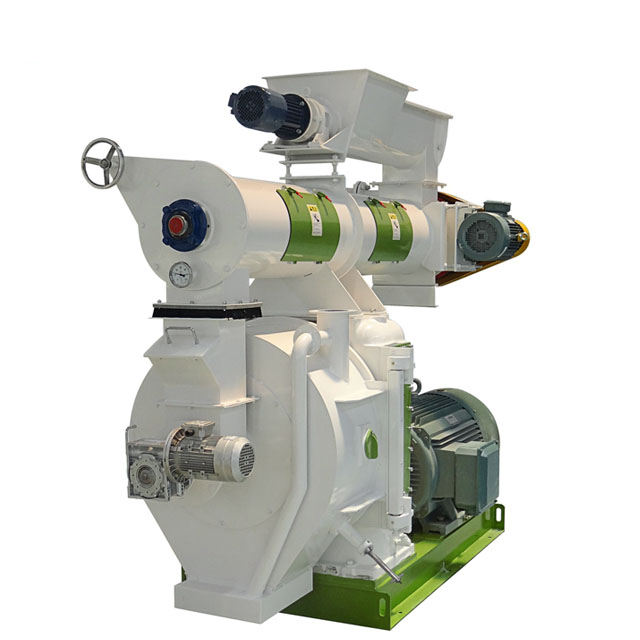
Two suppliers quote you a 1 t/h wood pellet machine. One says USD 12,000. The other says USD 46,000. Both attach a photo of a ring die mill. Both promise the same output. Somewhere between those two numbers is the machine you will actually run for the next eight years, and the difference is not profit margin.
This is a breakdown of what a wood pellet machine costs in 2026, what the money buys inside the housing, and which parts of the price you should never trade away. We build these machines, so read it knowing our bias — but the cost structure below is the same for every serious manufacturer in China, Europe or North America.
The price ladder by capacity
Capacity drives price more than any other variable, because capacity is bought with die area and motor size. A bigger die needs a bigger gearbox, a heavier frame, a larger feeder and more steel everywhere. Every output figure below assumes wood feedstock inside the 10–15% moisture window that pelletizing actually works in (Biomass Connect). Feed wetter material and the same machine will produce less, whatever the brochure says.
| Model class | Output (wood, 10–15% moisture) | Main motor | Typical buyer |
|---|---|---|---|
| Small ring die, 250 mm | 0.1–0.2 t/h | 18.5 kW | Farm or workshop using its own residue, single shift |
| Ring die, 420 mm | 0.9–1.2 t/h | 90 kW | First commercial plant, local bagged sales |
| Vertical ring die, 630 mm | 1–1.5 t/h | ~110 kW class | Serious small plant, two shifts, export or industrial buyer |
| Ring die, 520 mm | 1.5–2 t/h | 160 kW | Plant with a dryer and a contracted offtake |
| Ring die, 600 mm | 2.5–3 t/h | 185 kW | Regional producer, bulk loading |
| Ring die, 660 mm | 3–4 t/h | 200 kW | Industrial line, PLC control |
| Ring die, 800 mm | 5–6 t/h | 315 kW | Export-oriented plant, port or rail access |
We publish two price anchors rather than a full list, because the final number depends on die specification, feeder type and electrical standard. The 630 mm vertical mill in the 1–1.5 t/h class is quoted at roughly USD 19,800–25,800. The 850 mm machine at 4–5 t/h with a 280 kW motor sits at about USD 48,800. Between those two points you can see the shape of the curve: quadrupling output roughly doubles the price, and the gap is mostly steel, gearbox and motor.
Notice what that curve implies. Cost per tonne of annual capacity falls as you go up, which is why buyers are always tempted to oversize. Resist it. A 5 t/h machine running 900 hours a year is a worse investment than a 1 t/h machine running 5,000 hours, and the electricity bill on an oversized mill running at part load is brutal.
What sits inside the price
Strip the housing off and a ring die pellet mill is a die, two or three rollers, a main shaft, a gearbox, a motor, a feeder and a frame. The price gap between suppliers lives in the details of those seven items.
Steel weight and frame stiffness. A pellet mill is a press. It generates several tonnes of force through the die face, continuously, for years. A light frame flexes, the die runs out of alignment, and you spend the next two years chasing vibration and cracked welds. Ask for the machine weight. It is the cheapest proxy for build quality you will get, and any supplier who will not tell you has a reason.
Gearbox. This is where cheap machines hide. A planetary gearbox built for continuous industrial duty costs several times what a parallel-shaft box or a belt drive costs. Belt-driven mills are not automatically bad at small scale, but a belt drive on a 200 kW machine is a maintenance contract you did not budget for.
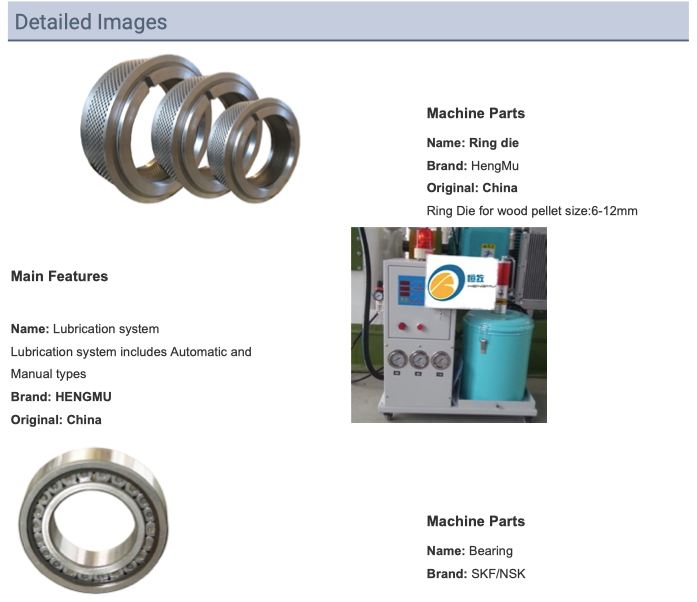
Die material and hole finishing. Dies are consumables, and the difference between a die that runs twice as long as another is alloy, heat treatment and how the holes are drilled and polished. A poorly finished hole raises energy consumption immediately, because every pellet has to be forced through a rough channel. What the die ultimately has to deliver is a pellet that survives a truck: ENplus A1 requires 98.0% mechanical durability and at most 0.7% ash (ENplus). A die that cannot hold that on your material is the wrong die, however cheap it was.
Roller bearings. Rollers run hot, dusty and under load. Bearings are the most common failure point on any pellet mill, and branded bearings cost more than unbranded ones for a reason. Ask what is inside.
Feeder and conditioner. A forced feeder with variable frequency control lets you match feed rate to die load instead of choking the mill by hand. A conditioner adds heat and moisture before the die. Both add cost and both change your output quality on dry, hard material.
Electricals and protection. Overload protection, thermal monitoring, emergency stop, and a control panel that a local electrician can read. Cheap machines often ship with a motor starter and nothing else.
Why two mills rated at 1 t/h can differ by a factor of three
Ratings are marketing until they are tied to conditions. A mill rated at 1 t/h on dry pine sawdust at 12% moisture will not deliver 1 t/h on rice husk at 15%, and it will not deliver anything close on wet material that has not been dried. Three things separate an honest 1 t/h machine from an optimistic one.
Die area and roller coverage. Output scales with the area of die surface being swept per revolution. Two mills with the same nominal die diameter can differ in die width, roller diameter and the number of rollers. More roller coverage means more material pressed per revolution and lower pressure per hole.
Duty cycle. A machine designed for eight hours a day and a machine designed for 24/7 differ in bearings, lubrication and cooling. If you plan two shifts, say so in the enquiry. Suppliers price to the duty you declare, and a mill bought for one shift will fail early on three.
Motor service factor and actual power draw. A 90 kW motor that is really pulling 95 kW at rated output is a 90 kW motor with a short life. The honest figure is not the nameplate, it is the amps on the panel when the die is loaded. Ask for the rated current and check it against the motor datasheet.
One practical test: ask each supplier what their machine does on your material at your moisture, and ask what happens to output at 2% higher moisture. A supplier who has actually run the material will answer with a range and a reason. A supplier who has not will repeat the brochure number.
Costs that sit outside the machine price
The machine is often less than half of what a working plant costs, and the rest is the part buyers forget. None of the items below appear on a mill quotation unless you ask.
| Item | Why it exists | How to budget it |
|---|---|---|
| Freight and insurance | A 5 t/h mill is heavy; sea freight is priced on volume and weight, not value | Ask for CIF to your port, then compare with FOB plus your own forwarder |
| Import duty and clearance | Rates vary by country and by machine classification | Confirm the HS code before you sign, not after |
| Foundation and floor | The mill needs a rigid, level base; a thin slab will crack | Get a civil quote once you have the layout drawing |
| Electrical supply and cabling | Connected load includes mill, feeder, fans, conveyors and dryer | Confirm transformer capacity with your utility first |
| Installation and alignment | Die and roller gap, belt tension, feeder calibration | Either pay for a commissioning engineer or train your fitters properly |
| Spare die and rollers | Wear parts with a finite life | Ship with the machine; buying later costs freight and downtime |
| Dust collection | Fire and health compliance | Size it with the line, not after the first inspection |
| Training and documentation | Operators who understand the machine | Insist on a written handover and a maintenance schedule |
Five-year running cost: where the money actually goes
Purchase price is a one-time number. Electricity and wear parts are forever. At 1 t/h and 6,000 operating hours a year you are making 6,000 tonnes, and small differences per tonne become large differences per year.
Take electricity first. A US Department of Energy national laboratory study of flat-die pelleting measured specific energy consumption from 75 to 275 kWh per tonne depending on feedstock moisture and die speed (OSTI). At the US average industrial tariff of 9.64 cents per kWh in August 2026 (EIA), 100 kWh per tonne is about USD 9.60 in power alone — and that is before drying and grinding, which on a wet-feed plant can be the bigger half of the bill.
| Cost line | What it depends on | What to ask the supplier |
|---|---|---|
| Dies | Tonnes per die, die size, material, your ash content | “How many tonnes should I expect from one die on my material?” |
| Rollers and bearings | Duty cycle, lubrication discipline, feed quality | “What is the roller rebuild cost and lead time?” |
| Electricity | kWh per tonne, local tariff, part-load operation | “What is the rated current at full die load?” |
| Labour | Automation level, shifts, local wages | “How many operators per shift on this configuration?” |
| Dryer fuel | Water removed, heat source, insulation | “How much water per hour does this dryer remove?” |
| Downtime | Spares on the shelf, local service response | “What is your response time for a gearbox failure?” |
Buyers fixate on the first column of the first table and ignore the last row of this one. A week of unplanned downtime on a 1 t/h plant costs more than the price difference between a mid-range and a premium mill. We have seen this on both sides of the argument, and it is the reason we push buyers toward a spare die and a stocked bearing set rather than an upgraded control panel. Producer associations also publish practical guidance worth reading before you commit capital — the Wood Pellet Association of Canada is one of the more useful ones.
New, used or rebuilt
Used pellet mills are widely available and occasionally a good buy. Three checks decide it.
Look at the die seat and the main shaft for fretting or weld repair. Look at the gearbox oil for metal. And ask why the machine is for sale — a mill sold because the owner retired is a different object from a mill sold because it never ran reliably on the owner’s material. Rebuilt machines from a reputable workshop can be excellent value at 50–60% of new price, but only if the rebuild included bearings, seals and a new die rather than a coat of paint.
What you cannot rebuild cheaply is documentation. A used machine with no wiring diagram, no spare parts list and no maintenance history will cost you more in the first year than you saved on the purchase.
Payment terms, warranty, and the clauses worth arguing about
Standard terms from Chinese manufacturers are 30% deposit with the balance before shipment, and a 12-month warranty on the main frame and gearbox with wear parts excluded. That is normal and fair. Three things are worth negotiating before you sign.
Performance acceptance. Write the capacity and pellet durability target into the contract, with the test material and moisture specified. If the machine does not hit it during commissioning, you want a remedy defined in advance.
Wear parts on the first shipment. A spare die, a roller set and a bearing kit, priced into the deal. Suppliers will usually discount these heavily when they ship with the machine.
Documentation language. Manuals, wiring diagrams and the maintenance schedule in a language your team reads. This sounds trivial until a night shift is staring at a fault code in a language nobody on site speaks.
Engineers’ time is worth naming too. A commissioning visit is not a courtesy; it is a line item. Ask whether it is included, how many days, and who pays for flights and accommodation. Getting that in writing prevents the most common argument in the last week of a project.
Five questions to ask before you accept any quotation
Print this and take it to your next supplier meeting. The answers tell you more than the price does.
- “What is the machine weight, and what is the gearbox type?” Light machine plus belt drive equals a maintenance problem at industrial duty.
- “What output do you guarantee on my material at my moisture, and who tests it?” A guarantee with a named test condition is worth something. A brochure number is not.
- “What is included in the scope, item by item?” Ask for “included” or “by client” against every line of the plant, not just the mill.
- “What does a die cost, and how many tonnes will it produce on my feedstock?” This single answer predicts your largest recurring cost.
- “Who commissions the line, for how many days, and what does the handover include?” If the answer is vague, the risk transfers to you.
Price is the easiest thing to compare and the least useful. The mill that costs USD 8,000 less and eats two extra dies a year has already given the money back. Look at the die, the gearbox, the bearings and the people who will answer the phone in year three — then look at the price.
If you are still sizing the plant rather than choosing a machine, our guide to buying from a pellet machine manufacturer covers the wider selection process, and the complete production line page shows how the mill price fits into a full plant budget. For the upstream side, a hammer mill and a rotary dryer usually cost more together than the mill itself.