
Almost every European pellet buyer asks the same first question: “Are your pellets ENplus certified?” If you manufacture pellets — or plan to — and you can’t answer confidently, the deal usually moves to a competitor who can. This guide explains what ENplus A1 certification actually requires, who checks it, what it costs you in process discipline, and what a pellet production line must do to meet the limits on the first audit.
What the ENplus scheme actually is
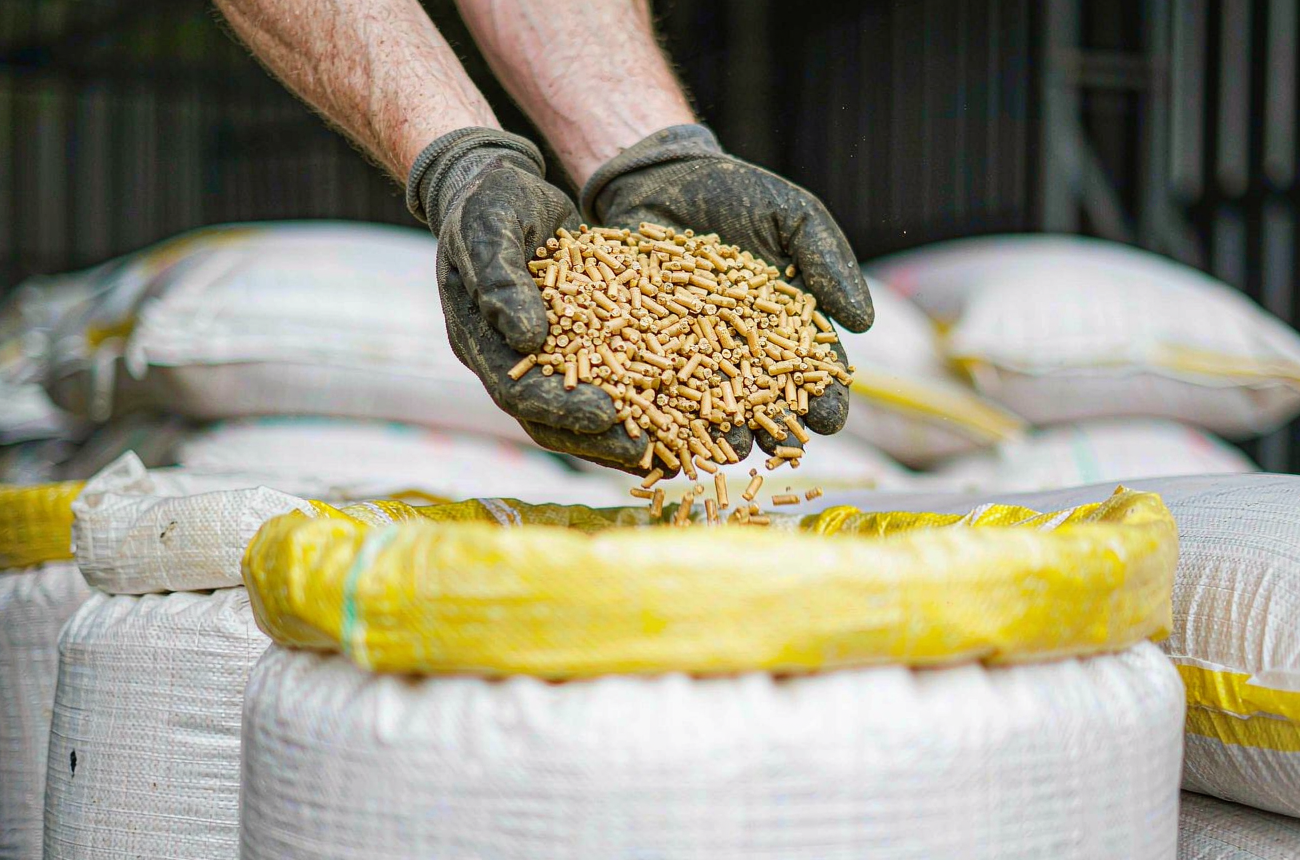
ENplus is a third-party certification scheme for wood pellets, run internationally by the European Pellet Council under Bioenergy Europe. It is not a law and not a government standard. It is a private quality label that has become the de facto reference in European pellet trade because it covers the whole chain — production, storage, bagging, and delivery — rather than only the fuel itself.
The technical requirements are largely based on ISO 17225-2, the international standard classifying graded wood pellets, but the scheme goes further: it demands traceability, annual surveillance, and independent verification. Certification bodies auditing your plant must themselves be accredited to ISO/IEC 17065, and the laboratories testing your samples must be accredited to ISO/IEC 17025, as described on the ENplus official site. That double layer of accreditation is the whole point — the certificate means an independent, qualified body checked your fuel, not that you checked it yourself.
A1, A2, B: the numbers that matter
The scheme defines three quality classes. A1 is the premium grade that residential appliance buyers and most European traders specify. The threshold values below come from the ENplus Handbook (version 3.0, Part 3):
| Property | Unit | ENplus A1 | ENplus A2 | ENplus B | Test method |
|---|---|---|---|---|---|
| Diameter | mm | 6 ± 1 or 8 ± 1 | 6 ± 1 or 8 ± 1 | 6 ± 1 or 8 ± 1 | ISO 17829 |
| Length | mm | 3.15–40 | 3.15–40 | 3.15–40 | ISO 17829 |
| Moisture | w-% | ≤ 10 | ≤ 10 | ≤ 10 | ISO 18134 |
| Ash | w-% | ≤ 0.7 | ≤ 1.2 | ≤ 2.0 | ISO 18122 |
| Mechanical durability | w-% | ≥ 98.0 | ≥ 97.5 | ≥ 96.5 | ISO 17831-1 |
| Fines (<3.15 mm) | w-% | ≤ 1.0 (≤ 0.5 bagged) | ≤ 1.0 (≤ 0.5 bagged) | ≤ 1.0 (≤ 0.5 bagged) | ISO 18846 |
| Net calorific value | kWh/kg | ≥ 4.6 | ≥ 4.6 | ≥ 4.6 | ISO 18125 |
| Bulk density | kg/m³ | 600–750 | 600–750 | 600–750 | ISO 17828 |
| Additives | w-% | ≤ 2 | ≤ 2 | ≤ 2 | — |
| Nitrogen | w-% | ≤ 0.3 | ≤ 0.5 | ≤ 1.0 | ISO 16948 |
| Sulfur | w-% | ≤ 0.04 | ≤ 0.05 | ≤ 0.05 | ISO 16994 |
| Chlorine | w-% | ≤ 0.02 | ≤ 0.03 | ≤ 0.03 | ISO 16994 |
| Ash deformation temperature | °C | ≥ 1200 | ≥ 1100 | — | CEN/TS 15370-1 |
The two rows that trip up most producers are ash and mechanical durability. Everything else is mostly a feedstock property you control through raw material selection; those two are process properties you control through the machine line — and they are exactly where the difference between an ENplus-grade line and a casual one shows up.
Why European buyers ask for it
Europe is not just the biggest pellet market — it is the market that standardization built. According to Bioenergy Europe’s 2026 Pellet Statistical Report, Europe accounts for about 70% of global pellet demand and 45% of global production, with European output reaching a record 24.1 million tonnes in 2025. Residential consumption alone rose to 15.3 million tonnes, and more than 6.5 million European households now heat with pellets.
That demand base is overwhelmingly residential, which means the customer is a homeowner with a €4,000 pellet boiler in the living room. Homeowners cannot test fuel themselves. They rely on the seal on the bag. That is why European traders, supermarket fuel brands, and appliance manufacturers push certification down the supply chain: an ash problem in Vietnam becomes a warranty claim in Vienna.
For context on how bioenergy fits European Union energy policy, the European Commission maintains an official biomass and bioenergy overview that explains the sustainability framework certified fuels operate within.
How certification works, step by step
The process is more administrative than most producers expect. Machine quality is only half of it; documentation is the other half.
| Step | What happens | What you must prepare |
|---|---|---|
| 1. Application | You apply to the ENplus Competent Management (or a national licenser where one exists) | Company details, plant information, pellet class sought |
| 2. Contract and fees | Fee schedule depends on plant size and activities (production, bagging, trade) | Budget approval; fees vary — request a quote from the certification body |
| 3. Initial audit | An accredited certification body inspects equipment, facilities, processes and management system | Process documentation, QA procedures, training records, traceability system |
| 4. Sampling and testing | An accredited testing body takes samples; laboratory results go to the certification body | Pellets that already meet class limits — pre-test them at an ISO 17025 lab first |
| 5. Certificate issued | You receive an ENplus ID and may use the seal on approved bag designs | Approved bag design; trademark usage rules |
| 6. Annual surveillance | Yearly conformity assessment continues for the life of the certificate | Ongoing QA records, complaint handling, self-monitoring |
Two practical notes from working with producers through this. First, testing failures at the initial audit are expensive and slow — commission a pre-test yourself before the official sampling, so surprises happen on your schedule, not theirs. Second, traceability paperwork fails more audits than pellet chemistry does. If you cannot show where a batch of pellets came from, which raw material lot fed it, and where it shipped, the audit stalls regardless of how good the fuel is.
What your production line must control to hit A1

The A1 limits translate into four process control points, and each one lives at a specific machine in the line:
Ash ≤ 0.7% — controlled at raw material intake. Clean white wood, debarked chips, and controlled additives only. Bark, soil-contaminated logging residue and plywood waste push ash past the limit quickly. No machine in the line removes ash; the discipline lives in your purchasing.
Moisture ≤ 10% — controlled at the dryer. The pelletizing sweet spot sits around 10–15% incoming moisture according to the Biomass Connect pelletisation guide, and finished pellets must come out at or below 10%. That gap is the dryer’s job, and it is why we size the مجفف دوار as seriously as the press itself.
Mechanical durability ≥ 98.0% — controlled at the pellet mill. Consistent compression requires the right die compression ratio for your species, healthy roller shells, and conditioning that brings heat and moisture into balance. Our YPM630 vertical ring die machine was specified specifically for EN A1 wood pellet work, with dies machined in-house on CNC equipment and vacuum heat treatment.
Fines ≤ 1.0% — controlled after the cooler. Durability makes pellets strong; the cooler, screener and conveying design decide whether that strength survives to the bag. Drop pellets three meters into a silo and you will manufacture fines no die can prevent.
The ways plants actually fail
In our experience, audit failures and customer complaints cluster around a short list:
Ash creep. The plant passes its audit on clean sawdust, then quietly starts blending in bark-heavy material when clean feed gets expensive. Ash drifts from 0.5% to 0.9%. Nobody notices until a surveillance test catches it — and a suspended certificate is a public fact on the ENplus website, visible to every buyer who searches your name.
Moisture drift in the wet season. Dryer output that held 9% in March holds 11.5% in the monsoon. Certified producers need in-process moisture monitoring, not a lab test once a month.
Fines after bagging. The fuel passes the test at the factory gate but arrives dusty. ENplus checks fines at loading and bagging precisely because transport and handling create them — which makes your cooler, screener and bagging line part of your quality system.
Documentation gaps. Batch records, supplier declarations for additives, calibration certificates for scales and moisture meters. Boring, decisive.
Is it worth it for a plant outside Europe?
If you sell inside your own region to boiler and stove users, formal certification may not pay for itself yet — local buyers often test fuel against ISO 17225-2 classes without demanding the ENplus seal. If you export to Europe, or want to, the calculation changes: certified producers get listed in a public database that traders search first, and several Japanese and Korean industrial buyers similarly treat third-party-verified fuel as a purchasing requirement.
A middle path many Asian producers take: build the line to A1 process discipline now, test fuel at an accredited lab to ISO 17225-2, and add the formal seal when a European contract justifies it. The production line requirements are identical either way — certification is a paperwork and audit layer on top of machinery that was specified correctly in the first place.
Pre-audit checklist: before the certification body visits
Use this list to judge whether you are genuinely ready, not just hopeful:
- Recent lab test (ISO 17025 accredited) showing every A1 parameter inside limits — ash, moisture, durability, fines, bulk density, NCV
- Raw material sourcing records proving clean wood origin, plus additive declarations if you use any
- Batch traceability from raw material lot to shipped delivery, retrievable within minutes, not days
- Calibration certificates for moisture meters, scales and thermometers
- Written QA procedures with named responsibility — who tests, how often, what triggers a hold
- Die and roller maintenance log, because consistency of compression is part of consistency of fuel
- Approved bag design application ready, if you will bag under the seal
- Complaint-handling procedure — auditors always ask what happens when a customer calls
If more than two items on that list are missing, fix them before you pay for an audit. The fee buys an assessment, not a rescue.
One last reference point for producers tracking the demand side: the Wood Pellet Association of Canada publishes market and safety resources that show how mature pellet markets treat certification and quality as entry conditions, not marketing extras. The direction of travel is obvious, and plants that build the discipline early tend to get the contracts first.