
Stop leaving money on the table with standard machines struggling with today’s demanding parts. The injection molding landscape has shifted. Next-generation machines aren’t just faster or bigger; they’re smarter, more precise, and purpose-built to conquer intricate geometries, advanced materials, and ultra-tight tolerances that command premium pricing. This is how you unlock new markets and boost profitability.
Why Standard Machines Are Costing You Opportunities (And Profits)
Basic hydraulic or even older electric machines hit walls with modern part requirements:
- Complexity Barrier: Thin walls, micro-features, undercuts, intricate textures, living hinges? Standard machines lack the precise, responsive control needed. Result: High scrap rates, compromised part quality, and lost bids.
- Material Limitations: Engineering resins (PPA, PEEK, LCP), filled compounds (glass, carbon fiber), TPEs/TPUs, and bio-polymers demand precise thermal profiles and injection profiles beyond basic controls. Standard machines cause degradation, weak weld lines, or inconsistent properties.
- Tolerance Trouble: Medical components, optics, micro-electronics? Achieving micron-level tolerances consistently requires extreme stability in clamping, injection, and temperature control – often missing in older tech. Scrap and rework eat margins.
- Cycle Time Ceiling: Optimizing fill, pack, hold, and cooling phases for complex parts is manual guesswork on basic machines. Hidden seconds per cycle add up to massive lost capacity annually.
- Sustainability & Cost Drag: Hydraulic machines guzzle energy (~60%+ of total part cost). Inefficient processes waste material. Rising energy costs and environmental pressures make this unsustainable.
The Next-Gen Arsenal: Technologies Driving the Revolution
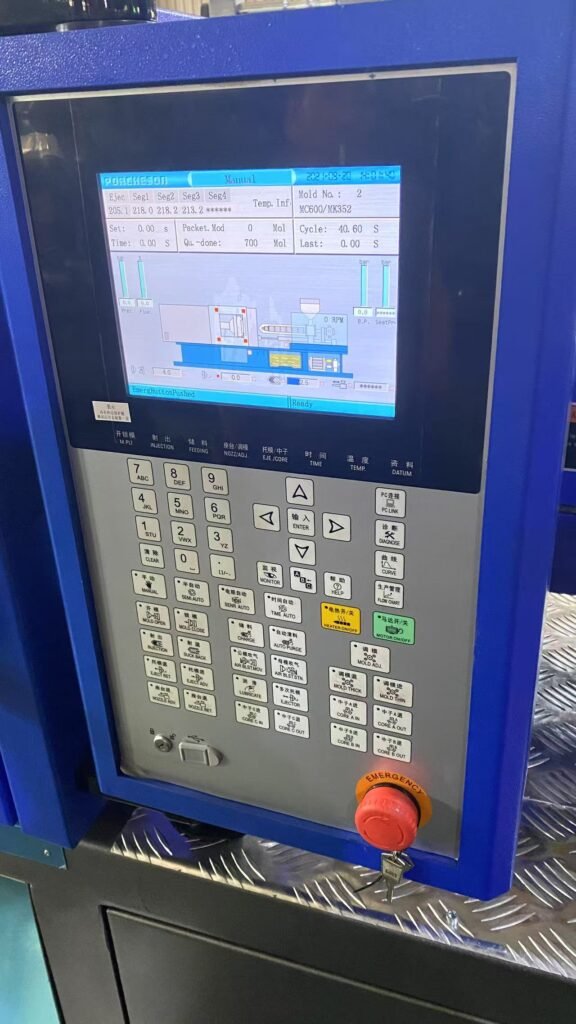
Modern machines solve these challenges through integrated intelligence and advanced mechanics:
- High-Precision, All-Electric & Hybrid Drives:
- All-Electric: Superior repeatability (<0.01mm), fastest response times, ultra-clean operation, energy savings up to 40-60% vs. hydraulic. Dominates micro-molding, medical, optics.
- Hybrid (Servo-Hydraulic): Combines hydraulic power for clamping with servo-electric precision for injection. Ideal for larger parts needing high clamp force and better control than full hydraulic. Energy savings 20-40%.
- Edge: Unmatched precision, speed, energy efficiency, reduced noise/heat.
- Intelligent, Adaptive Process Control (AI & Machine Learning):
- Real-time monitoring of pressure, temperature, viscosity, position.
- AI algorithms predict and automatically compensate for material variations, mold temperature drift, and machine wear during the cycle.
- Self-optimization for fastest cycle times while maintaining quality.
- Predictive maintenance alerts prevent unplanned downtime.
- Edge: Consistent quality (Cpk >1.67), minimized scrap, maximized throughput, reduced skilled operator burden.
- Multi-Material & Overmolding Mastery:
- Advanced rotary platens, core-back systems, and precise shot control.
- Seamless integration for 2K/3K molding (rigid/soft combinations), sandwich molding, IML (In-Mold Labeling), IMD (In-Mold Decoration).
- Precise control of bonding interfaces and material flow fronts.
- Edge: Create integrated, high-value assemblies in a single cycle, eliminating secondary ops.
- Vario-Thermal & Conformal Cooling Control:
- Vario-Thermal (Rapid Heat Cycle Molding – RHCM): Rapidly heats mold surface (steam, induction, high-temp oil) before injection, then quickly cools. Eliminates flow lines, improves surface finish (Class A), allows deeper textures, improves strength of weld lines.
- Conformal Cooling: 3D-printed mold inserts with cooling channels following the part contour. Achieves uniform cooling, reduces cycle times by 15-30%+, minimizes warpage.
- Edge: Stunning aesthetics, enhanced structural integrity, faster cycles.
- Micro-Molding & High-Speed Capabilities:
- Dedicated micro-machines with shot sizes down to 0.01g, micron-level positioning.
- Ultra-high injection speeds (>1000mm/s) for thin-wall packaging or preventing premature freeze-off in complex parts.
- Edge: Produce impossibly small, intricate parts (medical devices, micro-optics) and dominate thin-wall markets.
The Profitability Payoff: Data Doesn’t Lie
Investing in next-gen tech delivers tangible ROI:
| Next-Gen Injection Molding Impact (2024) | Key Metrics |
|---|---|
| Avg. Margin Increase on Complex Parts | 15-60% (McKinsey) |
| Scrap Rate Reduction | 25-70% (Machine Builder Data) |
| Energy Cost Reduction (vs. Hydraulic) | 40-60% (All-Electric) / 20-40% (Hybrid) |
| Cycle Time Reduction Potential | 10-30% (AI + Conformal Cooling) |
| Market Growth Driver | Medical Devices (8.1% CAGR), Electric Vehicles (Lightweighting), Premium Consumer Goods (Grand View Research) |
Industry Wins: Who’s Capturing Higher Margins?
- Medical Device Tier 1: “Switching to all-electric micro-molding machines with AI control let us produce Class III implantable components with zero defects. We secured a 5-year contract at a 35% premium.” – Director of Manufacturing. Edge: Zero-defect quality, regulatory compliance, premium pricing.
- Automotive Lighting: “Vario-thermal molding on a servo-hydraulic machine eliminated sink marks and flow lines on our complex LED lens arrays. We reduced finishing costs by 80% and won a new EV platform.” – Engineering Manager. Edge: Flawless optics, cost reduction, design win.
- Consumer Electronics: “Multi-material overmolding (rigid frame + soft-touch grip) in one cycle on an intelligent hybrid machine eliminated our manual assembly line. Unit cost down 22%, product quality consistency soared.” – Operations VP. Edge: Simplified supply chain, cost savings, enhanced product feel.
- Advanced Packaging: “High-speed all-electric machines running 1.5s cycles for thin-wall containers give us the capacity to take on surge orders competitors can’t handle. Our plant utilization is maxed out.” – Plant Manager. Edge: Unmatched speed, responsiveness, market share capture.
- Specialty Industrial: “Molding high-glass-fill PPA connectors on a machine with advanced screw design and closed-loop viscosity control eliminated brittleness issues. Customer returns dropped to near zero, protecting our reputation.” – Quality Lead. Edge: Material mastery, reliability, customer retention.
Implementing Next-Gen: Key Considerations for Success
- Define Your “Complex” & Target Margins: What parts are you losing or want to win? What tolerances, materials, aesthetics, or cycle times are required? Quantify the value.
- Machine Type Match: All-Electric (precision, micro, clean), Hybrid (larger parts, cost/performance), High-Tonnage Hydraulic (simpler, very large parts). Don’t overbuy, but don’t under-spec.
- Control System Intelligence is Non-Negotiable: Demand AI/ML capabilities for adaptive control, real-time monitoring, and predictive maintenance. This is the brain.
- Auxiliary Integration: Ensure compatibility with RHCM systems, conformal cooling, robotics, IML/IMD, and advanced dryers/material handlers. Think ecosystem.
- Partner, Don’t Just Purchase: Choose a supplier with deep application expertise for your target parts and materials. Training and ongoing support are critical.
- Total Cost of Ownership (TCO): Factor in energy savings (kWh cost rising!), scrap reduction, labor efficiency, maintenance costs, and potential revenue uplift. Upfront cost is only one piece.
Critical Next-Gen Machine Specs Checklist
Demand these capabilities for complex parts:
- Injection Unit:
- Repeatability: < +/- 0.01 mm (All-Electric standard).
- Injection Speed: > 500 mm/s (High-Speed), >1000 mm/s (Thin-Wall).
- Screw Design: Optimized for target materials (barrier screws, low-shear).
- Plasticizing Capacity: Sufficient for shot size & material requirements.
- Closed-Loop Control: Pressure, speed, V-P switch, viscosity monitoring.
- Clamping Unit:
- Precision & Parallelism: < 0.03mm/m deflection under load.
- Tie-Bar Technology: Stretch-compensation or tie-barless for easier mold changes.
- Platen Size/Type: Compatibility with multi-shot/rotary platens if needed.
- Clamp Force Accuracy: Precise, repeatable tonnage application.
- Control System:
- Adaptive Process Control: AI/ML for real-time adjustments.
- Data Acquisition: Comprehensive (pressure, temp, position, viscosity, etc.).
- User Interface: Intuitive, programmable, remote monitoring capable.
- Integration: Open interfaces (OPC UA, Euromap) for MES/Industry 4.0.
- Energy Efficiency:
- Drive Type: All-Electric (highest savings), Servo-Hydraulic Hybrid.
- Energy Recovery: Regenerative braking on electric axes.
- Certification: EUROMAP 60.1 energy rating (high score preferred).
- Warranty & Support:
- Comprehensive coverage (mechanical, electrical, controls).
- Rapid response time guarantees.
- Application engineering support availability.
Next-Gen Molding FAQs: Unlocking Value
- Q: What’s the realistic ROI timeframe on a next-gen machine?
- A: Typically 18-36 months, driven by: Premium part pricing, scrap reduction (25-70%), energy savings (40-60%), cycle time gains (10-30%), and reduced downtime. Complex medical or micro-molding ROI can be under 18 months due to high part value.
- Q: Can we retrofit intelligence/controls onto older machines?
- A: Limited upgrades exist (new controllers, sensors), but they rarely match the integrated precision, speed, and energy efficiency of a purpose-built next-gen machine. Core mechanics (injection/clamp) limit ultimate performance. For complex parts, new machinery is usually the better investment.
- Q: How steep is the learning curve for operators?
- A: Modern HMIs are more intuitive. However, mastering adaptive controls and optimizing complex processes requires targeted training. Partner with your supplier. The AI reduces the ongoing burden by automating adjustments, but skilled oversight remains vital.
- Q: Are next-gen machines only for huge volumes?
- A: No. While high-volume benefits amplify ROI, the ability to produce low-volume, high-value complex parts profitably is a key advantage. Micro-molding and high-precision machines excel in lower-volume, high-margin niches (medical, aerospace).
- Q: How does this impact sustainability goals?
- A: Significantly: 40-60% lower energy use, reduced scrap (less waste), potential for bio-based/recycled material processing (enabled by precise controls), and elimination of hydraulic oil. It’s a major step towards greener manufacturing.
The era of basic molding for premium parts is over. Next-generation injection machines provide the precision, intelligence, and versatility demanded by cutting-edge applications. This isn’t just about keeping up; it’s about capturing higher margins, entering lucrative new markets, and future-proofing your manufacturing against rising costs and complexity. The technology is proven, the ROI is clear, and the competitive advantage is substantial. Are you molding for the past or the future?