
The supplier questionnaire arrives from a utility in Rotterdam or a trading house in Tokyo, and somewhere on page four there is a line that reads: SBP certificate number. Not “do you have sustainability documentation”. A number.
For a mill that has spent two years getting ENplus right, that line can feel like a second, unrelated exam. It is not. ENplus describes the pellet in the bag. SBP describes where the wood in that pellet came from, and whether you can prove it to an auditor who does not work for your customer.
What SBP certifies — and what it does not
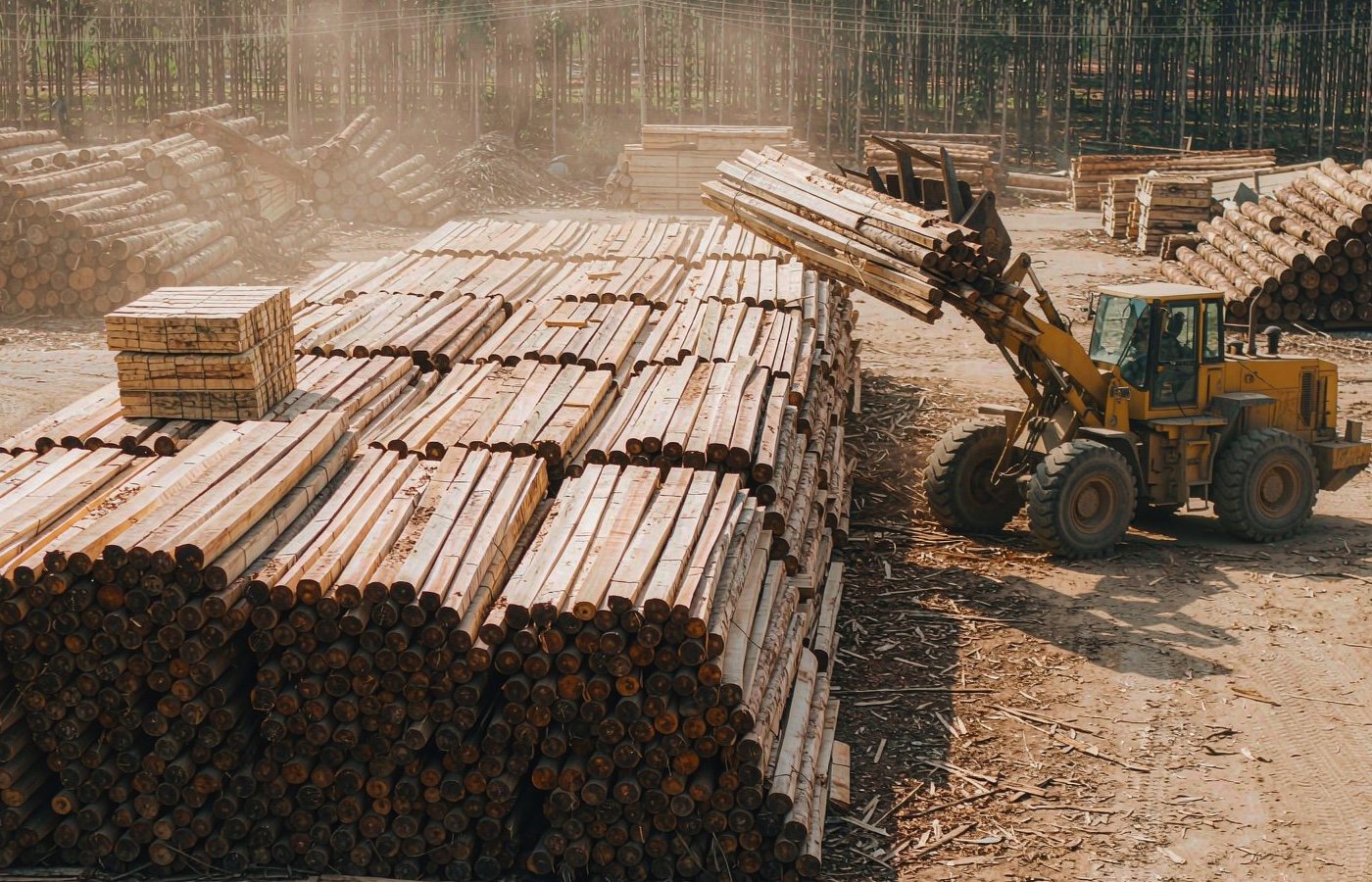
The Sustainable Biomass Program is a certification scheme built for woody biomass, and its unit of certification is the supply chain, not the fuel. When a mill holds an SBP certificate, what has been verified is that the feedstock entering the plant was legal and sustainable, that a supply base evaluation was carried out for the areas it draws from, and that certified material can be traced through the process and out to the customer with the right data attached.
That last part is where mills underestimate the work. SBP is not only a sustainability claim; it is a data-carrying system. Energy and carbon data travel with the biomass, which is why the scheme was adopted first by European power generators who had to report greenhouse gas savings to a regulator. If your weighbridge, production records and sales invoices cannot be tied together, the sustainability story does not matter — the audit stops at the arithmetic.
Note what is outside the scope. SBP does not test durability, moisture or ash. It does not replace ENplus or ISO 17225-2. A mill can hold SBP and still ship pellets that fail a durability test, and a mill can hold ENplus A1 and have nothing to show a utility about forest sourcing. Exporters who sell into both the residential and the industrial market usually end up holding both.
Where the scheme stands today
The scale is smaller than the pellet trade it serves, which is the single most useful fact for a mill deciding whether to bother. The scheme’s own dashboard currently lists 222 certificates across 15 countries, held by 143 biomass producers, 46 traders and 32 end-users. Certified pellet volume ran at 12.66 Mt in 2025, and the year-to-date figure of roughly 8 Mt is running about 33% ahead of the same point last year (Sustainable Biomass Program).
| Indicator | Current figure | What it tells a mill |
|---|---|---|
| Certificates issued | 222 | A specialised scheme, not a mass-market label |
| Countries represented | 15 | Concentrated in the export supply chains that feed EU, UK and Japanese buyers |
| Certificate holders | 143 producers, 46 traders, 32 end-users | Traders hold certificates too — your buyer may already be certified and need you to match |
| Certified pellets, 2025 | 12.66 Mt | Roughly a quarter of global pellet production, by Bioenergy Europe’s 53.5 Mt figure |
| Year-to-date pellets | 8 Mt, +33% year on year | Demand for certified volume is growing faster than the scheme’s certificate count |
Two structural changes are worth knowing about because they affect audits scheduled for this year. SBP has published revised regional risk assessments and new RED III Level A risk assessments ahead of Standards v2.1 implementation. In plain terms: the risk rating for your sourcing region may not be the one your consultant used two years ago, and the evidence the auditor asks for follows from that rating.
SBP, FSC, PEFC and ENplus: four different jobs
Mills often assume these schemes overlap and that one certificate can substitute for another. They do different work, and buyers ask for them at different points in the conversation.
| Scheme | What it covers | Who asks for it | Relationship to SBP |
|---|---|---|---|
| SBP | Legal and sustainable sourcing, supply base evaluation, chain of custody, energy and carbon data | EU, UK and Japanese utilities; traders supplying them | The scheme itself |
| FSC | Forest management and chain of custody at the forest and processor level | Buyers with timber procurement policies | FSC-certified feedstock can feed an SBP supply base |
| PEFC | National forest certification systems, chain of custody | European buyers, especially where national schemes dominate | Accepted feedstock route, same role as FSC |
| ENplus / ISO 17225-2 | Fuel properties: durability, ash, moisture, fines, dimensions | Residential and industrial fuel buyers | Independent of SBP; covers the product, not the origin |
The practical hierarchy: FSC or PEFC certification of the feedstock makes the SBP supply base evaluation much shorter, because you are relying on an existing forest-level system rather than building your own risk assessment. Mills with no forest certification at all can still certify, but they carry the full evaluation themselves — which is where most of the consulting cost sits. Both forest schemes run their own chain-of-custody standards, published at FSC and PEFC, and the audit evidence they require overlaps heavily with what an SBP auditor will ask for.
Why RED III pushed this from optional to commercial
The EU Renewable Energy Directive, revised in 2023, sets the sustainability and greenhouse gas criteria that biomass fuels must meet to count toward renewable targets in member states (Directive (EU) 2023/2413). For forest biomass, that means demonstrating legal harvesting, that the sourcing area is managed in line with sustainability requirements, and that the fuel delivers a minimum greenhouse gas saving against the fossil comparator, with thresholds that tighten over time.
Member states implement and verify those criteria, and utilities have to show compliance. They do not want to audit every mill in their supply chain themselves, so they delegate the checking to a scheme the regulator recognises. That is the commercial mechanism: SBP exists because a utility needs a document it can hand to a national authority, and your certificate is a component of that document.
This is also why “we can send you our forest permits” stopped working. A permit proves legality for one harvest. RED III asks about the sourcing area, the management system and the carbon balance, and it asks every year.
What a mill has to build before the first audit
Four work packages, in the order that saves the most time. The scheme publishes its own route through application, document review and audit on the SBP certification page, and it is worth reading before you talk to a consultant.
A supply base evaluation. You map the area your feedstock comes from, identify the forest types and the risks in that area, and describe the controls you have in place. A mill buying sawdust from twelve sawmills within 80 km has a very different evaluation from one importing wood chips by vessel.
Supplier controls. Every feedstock supplier needs to be assessed and recorded, with evidence on file. This is where mills with informal sawmill relationships discover that half their suppliers cannot produce a harvesting document.
A mass balance system. Certified and uncertified material will both run through the plant. You need a documented method for how volumes are accounted, and records that reconcile purchases, production and sales. The arithmetic has to close at audit, and it usually does not close on the first attempt.
Energy and carbon data. Electricity and fuel consumption per tonne of pellets, plus transport distances. If your plant does not meter the pellet line separately from the rest of the site, start metering now — a year of data before the audit is far easier than reconstructing it afterwards.
The audit sequence, and how long it takes
SBP audits follow a pattern that is standard across forest certification: written procedures reviewed first, then a site visit, then a report with findings, then an annual surveillance audit to keep the certificate alive. Stakeholder consultation usually happens before the site visit, which surprises mills — neighbours, NGOs and local authorities can be contacted as part of the assessment.
Timelines depend on scope and on how much of the evidence already exists. A mill that holds FSC chain of custody and has clean mass balance records can move in months. A mill starting from paper receipts and a spreadsheet can spend a year just getting the records to the point where an auditor will accept them. Budget the calendar time before you budget the fee.
Fees are quoted per scope by certification bodies, and combining the SBP audit with an FSC or PEFC chain-of-custody audit in the same visit is the standard way to keep the total down — the same auditor days cover overlapping evidence. Ask for the combined quote rather than two separate ones.
Does your mill actually need it?
Honest answer for most readers of this page: not yet, and probably not this year. SBP becomes commercially necessary when a buyer makes it a condition of the contract, and that happens in a fairly narrow set of situations.
You need it if you sell, or want to sell, to European or UK power generation, to Japanese utilities buying under sustainability-linked contracts, or to a trader who supplies those buyers and passes the requirement down. You need it if a tender document lists it. You may need it if your buyer’s own customer is a utility — the requirement travels down the chain faster than mills expect.
You do not need it to sell bagged pellets into Italian or German residential distribution, where ENplus A1 is the currency. You do not need it for industrial buyers in markets without a sustainability mandate, or for domestic heating fuel. And you do not need it to start a plant — the capital is better spent on drying capacity and a decent lab bench.
North American buyers sit in an odd spot: Canadian and US utilities have their own procurement expectations, and industry bodies such as the Wood Pellet Association of Canada publish member guidance that is often more demanding than the regulation. If your enquiry comes from that region, read the buyer’s own sourcing policy before assuming an EU scheme answers the question.
The middle case is the interesting one: a mill that has a European utility enquiry in front of it and 18 months before the first shipment. Starting the supply base evaluation early costs little and shortens the critical path. Waiting until the contract is signed usually pushes the first shipment back by a quarter.
Where first audits usually fail
Three findings come up often enough to plan for.
Mass balance that does not reconcile. Production records in tonnes of wet feed, sales in tonnes of finished pellets, and no documented conversion. The auditor does not need perfection, but the method has to be written down and applied consistently.
Supplier evidence gaps. A handful of sawdust suppliers with no harvesting documentation, discovered late. Either they get documents, or their volume moves to uncertified accounting — which changes the certified percentage you can sell.
Carbon data reconstructed after the fact. Estimated electricity consumption “based on the motor list” is not a metered figure. Sub-metering the pellet line is a small capital item and it removes an entire category of audit finding.
A readiness check you can run this week
Nine questions. Anything you cannot answer with a document is a task, and the count of tasks tells you whether to start now or next year.
| # | Question | Evidence that satisfies it |
|---|---|---|
| 1 | Can you list every feedstock supplier and the volume from each, for the last 12 months? | Purchase ledger reconciled to weighbridge tickets |
| 2 | Do all suppliers have legal harvesting or delivery documentation on file? | Signed supplier file, dated, with permits or certificates |
| 3 | Is any feedstock FSC or PEFC certified, and what share of volume? | Certificate copies plus invoice-level claims |
| 4 | Can you describe the sourcing area and its risk profile? | Map, radius or region definition, risk assessment |
| 5 | Is there a written mass balance procedure? | Procedure document plus a worked example for one month |
| 6 | Does the mass balance reconcile for the last three months? | Monthly reconciliation signed by production and sales |
| 7 | Is electricity metered separately for the pellet line? | Sub-meter readings, 12 months |
| 8 | Do you record fuel use and transport distance per delivery? | Fuel log and freight documents |
| 9 | Is someone named as responsible for the management system? | Job description and training record |
Six or more clean answers means the certification project is mainly paperwork and an audit fee. Two or three means you are looking at a records project first, and the sensible move is to fix the metering and the mass balance before engaging a certification body at all.
For the fuel-quality side of the same buyer conversation, see what ENplus A1 certification requires. If you are still at the stage of choosing equipment rather than certifying a plant, starting a wood pellet business covers the sequence, and buying a pellet machine from China covers the contract side. Mills already shipping to industrial buyers will find the measurement discipline in in-house durability testing useful for the same reason auditors ask for it: a number you can reproduce.